When the Whole Street Showed Up Hungry: The Slow Death of the American Backyard Gathering
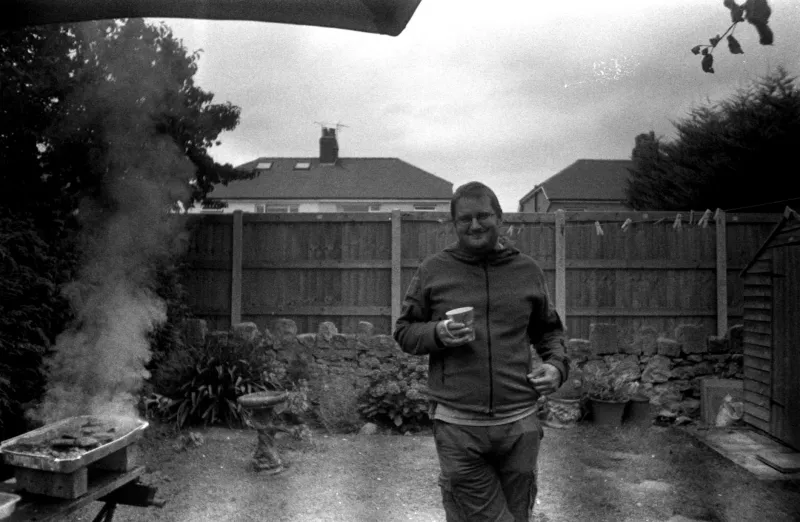
Picture a Saturday in 1962. Someone fires up a grill in the backyard. Within an hour, there are folding chairs scattered across the grass, kids chasing each other between adults' legs, and a card table that somehow keeps accumulating potato salad and Jell-O molds that nobody remembers carrying over. The neighbors didn't RSVP. They didn't need to. The smoke was the invitation.
Now picture a Saturday in 2024. A group text goes out eleven days in advance. Three people have dietary restrictions. Someone asks if it's okay to bring their dog. The host spends forty-five minutes on a playlist and quietly panics about whether the appetizers are interesting enough to photograph well.
Something happened in between those two Saturdays. Something worth understanding.
The Postwar Backyard as Common Ground
The great American suburb wasn't just a housing arrangement — it was a social infrastructure. The yards backed up against each other. The driveways were wide. The houses were close enough that you could hear your neighbor's screen door bang shut, and that proximity created an easiness between people that we've largely lost.
Postwar entertaining was casual by design and abundant by instinct. You made too much food because that was the point. You left the gate unlatched because someone was always on their way over. Kids moved freely between houses. Adults borrowed lawn chairs and returned them the next weekend. The line between your social life and your neighborhood was essentially nonexistent.
Hosts didn't perform. They fed people. There's a meaningful difference.
This wasn't unique to any one region or demographic. From block parties in Chicago to fish fries in Louisiana to porch-sitting culture across the South, the common thread was that entertaining was communal rather than curated. You didn't need a reason to gather. Proximity and a free afternoon were sufficient.
When Hosting Became a Production
The shift started slowly. As suburbs spread outward through the 1970s and 80s, lots got bigger and houses got more spread out. The accidental intimacy of the early postwar neighborhood — where you genuinely couldn't avoid your neighbors — gave way to something more deliberate and more distant.
Homes themselves changed. The open front porch, which had functioned as a semi-public social space for generations, disappeared in favor of the private back deck. The message, architectural and cultural, was subtle but clear: socializing moved from front-facing and community-oriented to back-facing and private. You stopped waving at the street. You retreated.
Then came the 1990s and the rise of what you might call the Aspirational Dinner Party — entertaining calibrated not just to enjoy company but to signal taste, effort, and social standing. Food television, lifestyle magazines, and eventually the internet raised the stakes of hosting in ways that made the whole enterprise feel daunting. You weren't just feeding friends anymore. You were being judged.
By the time Instagram arrived, the transformation was complete. The table setting needed to look good in a photo. The menu needed a narrative. The experience was as much for an imagined audience as for the actual guests sitting in front of you.
The Anxiety Economy of Modern Entertaining
Ask anyone who hosts regularly today and you'll hear a version of the same thing: it's exhausting. Not the cooking, necessarily — people have always cooked. It's the weight of expectation that's new.
There's the guest list calculus — who can be in the same room as whom, whose feelings will be hurt by not being included, whether the group has the right chemistry. There's the dietary landscape: vegetarian, vegan, gluten-free, nut-free, low-FODMAP, keto. There's the question of whether your home is presentable enough, whether the music is right, whether you've offered enough without overdoing it.
And underneath all of it, there's something lonelier: the growing unfamiliarity with neighbors that makes spontaneous gathering feel impossible. When you don't actually know the people on your street — when you've exchanged waves but not names, when their lives are a mystery to you — you can't just wave them into your backyard. Trust has to exist before hospitality can be casual.
Social media hasn't helped. It's given people a way to perform connection without actually building it. You can know what your college roommate had for dinner without knowing whether your next-door neighbor has been going through a hard year. The feeds are full. The yards are empty.
What Gets Lost When the Gate Closes
The research on social isolation is stark. Americans report having fewer close friends than at any point in recorded polling history. The number of people who say they have no one to discuss important matters with has roughly tripled since the 1980s. Loneliness is now being treated as a public health crisis.
And yet we have more ways to stay connected than any previous generation. The paradox makes sense when you understand that what we've lost isn't contact — it's the easy, low-stakes, unplanned togetherness that used to happen when people lived in actual relationship with their neighbors.
The old backyard cookout wasn't special because the food was extraordinary. It was special because it required nothing of you except to show up. No performance. No curation. No anxiety. Just a plate and a chair and the company of people you already knew because they lived forty feet away.
Getting Back to the Open Gate
Some communities are finding their way back. Block party revivals, front-yard happy hours, the quiet but growing movement toward front porch culture — there are people actively choosing proximity over privacy, abundance over curation.
It doesn't require a perfect charcuterie board. It requires deciding that feeding your neighbors matters more than impressing them.
The smoke was always the invitation. Maybe it still can be.