Friday Night Used to Come With a Human Voice Deciding What Came Next
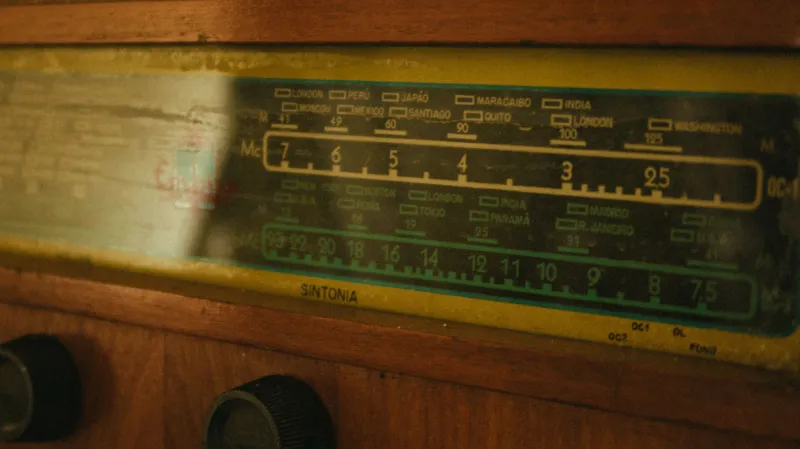
There was a specific ritual to Friday night radio in America, and if you're old enough to remember it, you probably remember it vividly. You'd tune to your station — the one you'd been loyal to all week — and the DJ would already be mid-sentence, talking over the fade of whatever had just ended, building something. A mood. An evening. A shared experience between a person behind a microphone and however many thousands of people were listening in cars, kitchens, and bedrooms across the same broadcast radius.
You didn't control what came next. That was part of it.
The DJ as Cultural Architect
The golden era of American radio DJs stretched roughly from the 1950s through the 1990s, a period when FM radio in particular became the dominant channel through which most Americans discovered new music. The DJ wasn't just a voice between songs. In many markets, they were a genuine local celebrity — someone with a name, a reputation, and an identifiable personality that listeners tuned in specifically to hear.
DJs like Wolfman Jack, Casey Kasem, and Alan Freed became national figures, but the ones who actually shaped daily listening habits were often local: the afternoon drive personality at a mid-sized city station who had been playing records for twenty years and knew exactly when to drop a deep cut after three straight hits, or the late-night host who played slower, stranger music that you'd never hear during daylight hours.
 Photo: Alan Freed, via radiologykey.com
 Photo: Casey Kasem, via assets-in.bmscdn.com
 Photo: Wolfman Jack, via i.etsystatic.com
These people had taste. Real, developed, sometimes eccentric taste — shaped by years of listening, industry relationships, and a genuine investment in music as something worth caring about. When a DJ championed an unknown artist or introduced a new genre to a regional audience, it mattered. Careers were built on regional radio support. Entire subcultures formed around the programming choices of a handful of influential stations.
And crucially, the experience was communal. When a song came on the radio, there was a reasonable chance that thousands of other people in your city were hearing it at the same moment. That shared simultaneity — the knowledge that you and your neighbor and the couple three streets over were all inside the same sonic moment — created a texture of cultural life that is genuinely difficult to replicate today.
The Request Line and What It Represented
One of the most underappreciated features of radio's golden era was the request line. You called a real phone number. Sometimes you got a busy signal for twenty minutes. When someone finally picked up, you gave your name, your dedication, and your song — and then you waited, listening, to hear if it actually played.
That waiting was not a bug. It was the entire point.
The request line was a feedback loop between the audience and the curator, a negotiation between what the DJ thought you should hear and what you actually wanted. It created investment. You were no longer a passive listener — you were a participant, with skin in the game, monitoring the broadcast to see if your taste would be acknowledged. When your song came on, it felt like a small personal triumph. When the DJ read your dedication out loud, it felt like being seen.
Compare that to the experience of adding a song to a Spotify queue. The song plays. That's it. There's no friction, no waiting, no moment of public acknowledgment. The transaction is complete and invisible.
What the Algorithm Does Differently
Streaming algorithms are genuinely impressive pieces of technology. Spotify's Discover Weekly, Apple Music's personalized radio, YouTube's recommendation engine — these systems have exposed millions of listeners to music they genuinely love and would never have found otherwise. The breadth of discovery available to a curious listener today is historically unprecedented. Any song ever recorded is effectively one search away.
But the algorithm optimizes for individual satisfaction, not collective experience. It learns what you specifically respond to and feeds you more of it, gradually building a listening environment that is exquisitely tailored to your preferences and almost entirely disconnected from what anyone else is hearing. Your Friday night playlist and your neighbor's Friday night playlist might share zero songs. They might not even share a genre.
This is efficient. It is not, in any meaningful sense, communal.
The shared cultural moments that radio produced — the song everyone heard on the same afternoon, the DJ's commentary on a news event that the whole city processed together, the experience of hearing something new and knowing that thousands of other people were hearing it for the first time at exactly the same moment — these things required a common channel. They required someone making choices that applied to everyone, not just to you.
The Thing That Got Optimized Away
There's a version of the streaming era's story that frames it purely as liberation — the listener finally freed from the gatekeeping of DJs and record labels, able to access anything without waiting for someone else to decide it was worth playing. That story is real. Gatekeeping in the music industry had genuine costs, and plenty of brilliant music spent decades locked out of mainstream radio because it didn't fit the format.
But gatekeeping also created shared ground. When everyone in a city was listening to the same three stations, they had a common musical vocabulary. They had references. They had the experience of being surprised by something they didn't choose — and sometimes that surprise was the beginning of a genuine obsession.
The algorithm doesn't surprise you, not really. It gives you a slightly more refined version of what you already like. It is, at its core, a mirror. The DJ was something different: an argument. A personality insisting that this song, right now, was worth your attention — and sometimes being spectacularly, wonderfully wrong.
Friday nights were better for the argument.