No Map, No Plan, No Problem: The Sunday Ritual That Once Defined American Family Life
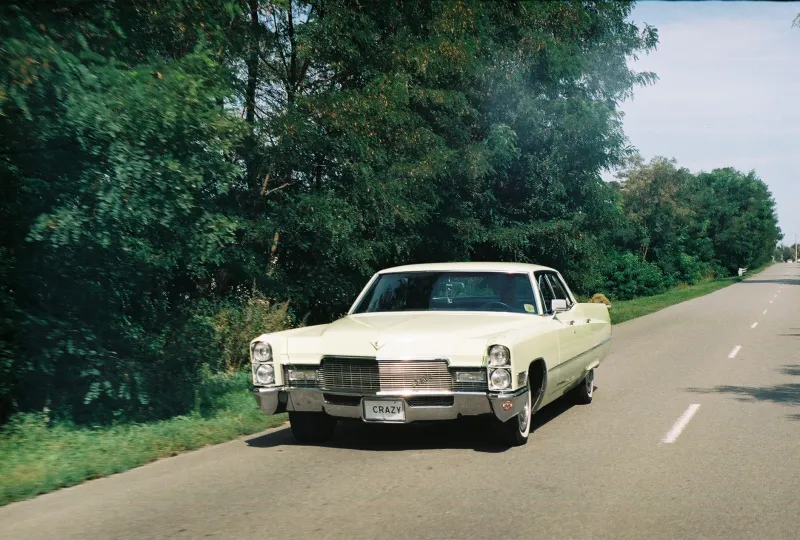
Sometime in the 1950s or early 1960s, on a Sunday afternoon in almost any suburb or small town in America, you could watch the same scene play out on street after street. Dad would finish washing the car in the driveway, dry it off with the same chamois he'd used for years, and announce to no one in particular that it was a good day for a drive. The kids would pile in. Mom would bring her sunglasses. Nobody would ask where they were going, because that wasn't really the point.
The Sunday drive was one of the most distinctly American leisure habits of the twentieth century — unhurried, purposeless in the best possible way, and quietly profound in what it said about how people wanted to spend their time together. And it is, for all practical purposes, completely gone.
How a Nation Fell in Love With Going Nowhere
To understand the Sunday drive, you have to understand what cars meant to ordinary Americans in the postwar decades. Before the 1940s, car ownership was still something of a luxury. After the war, with factories retooled and the economy surging, automobiles became genuinely democratic — something a factory worker or a schoolteacher could realistically own, maintain, and take pride in.
Owning a car in 1955 wasn't just a transportation decision. It was a statement. It was freedom made physical — a machine sitting in your driveway that could, at any moment, take you somewhere else. And for a generation that had lived through the Depression and a world war, the simple act of choosing to go nowhere in particular felt like a luxury worth savoring.
The roads helped. The Interstate Highway System was just beginning to take shape, but state routes and county roads were already stitching the American landscape together in ways that made casual exploration genuinely pleasurable. You could drive through farmland, past orchards, along rivers, through small towns you'd never heard of — and the pace was slow enough that you actually saw things. There was no GPS recalculating. There was no podcast competing for your attention. There was just the landscape moving past the windows and the particular quality of Sunday afternoon light.
A Ritual Built Into the Week's Architecture
What made the Sunday drive sustainable as a cultural habit was the structure of the week that surrounded it. Sunday was genuinely different from other days in mid-century America. Stores were closed. Offices were closed. Youth sports leagues hadn't yet colonized the morning. Church was done by noon. The afternoon stretched out in a way that felt almost deliberate — like the week had been designed to include this particular kind of emptiness.
Families didn't need to manufacture an occasion. The occasion was built in. You didn't have to decide to take a Sunday drive the way you'd decide to plan a vacation. You just did it, the way you'd always done it, because it was Sunday and the car was there and there was nowhere else you were supposed to be.
For kids, the back seat of the family car on a Sunday afternoon was its own kind of world. You watched the telephone poles tick by. You argued about what you saw out the window. You fell asleep against your sibling's shoulder. You stopped at a roadside stand and got peaches or apple cider or whatever was in season. None of it was remarkable. All of it was, in retrospect, irreplaceable.
When the Ritual Started to Unravel
The Sunday drive didn't die all at once. It faded through a combination of pressures that built gradually over the 1970s, 1980s, and 1990s, until the habit had simply become impractical for most families.
The 1973 oil crisis was the first real blow. When gas prices spiked and lines formed at stations across the country, driving for the pure pleasure of it started to feel irresponsible — even vaguely unpatriotic. The federal government asked Americans to conserve fuel. Driving nowhere wasn't a great look.
The roads themselves changed too. The same interstate system that had once made driving romantic now made it stressful. Highways built for efficiency replaced the meandering state routes that had made Sunday driving pleasurable. You couldn't really wander on an interstate. You could only go fast in a predetermined direction.
And then there was the way weekends themselves changed. As dual-income households became the norm and youth sports, school activities, and structured programming filled every available hour, Sunday afternoon stopped being empty in the way it once was. Leisure time acquired a purpose requirement — you were supposed to be doing something, going somewhere, accomplishing something with the hours. Driving nowhere stopped making sense within that framework.
What Was Actually Being Preserved
It's tempting to romanticize the Sunday drive as pure nostalgia — a simpler time, a slower pace, all that. But there's something genuinely worth examining in what the ritual was actually doing for the people who practiced it.
It forced proximity without agenda. The family was together, in a confined space, with no screens and no separate activities. Conversation happened because there was nothing else to do. Kids saw their parents in an unguarded, relaxed state. Parents saw their kids notice things. The car was, accidentally, a very effective family therapy room.
It also cultivated a particular relationship with place. People who grew up taking Sunday drives developed a detailed, tactile knowledge of the landscape around where they lived — not the highway version of that landscape, but the back-road version, the one with the funny-shaped barn and the creek that flooded every spring and the farmstand that only opened in August.
The Long Drive Home
Nobody cancelled the Sunday drive. There was no announcement, no cultural moment when it officially ended. It just became rarer, and then rarer still, until the generation that grew up with it got old enough to miss it and the generation that didn't grow up with it had no idea what they were missing.
In an era when family togetherness is constantly discussed and endlessly scheduled and deliberately engineered through apps and experiences and planned activities, it's worth remembering that one of the most effective versions of it ever practiced in this country required nothing more than a tank of gas and a Sunday afternoon with nowhere to be.