The Big Book That Brought the World to America's Front Porch
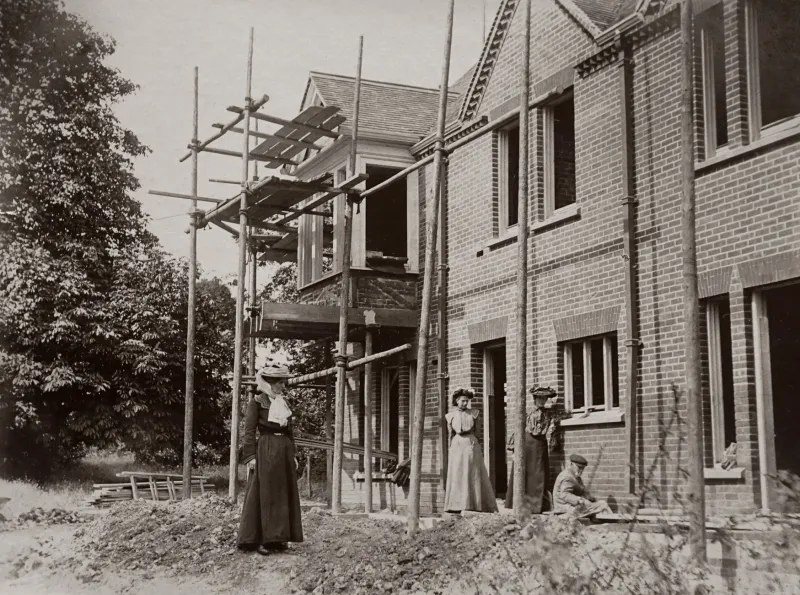
Somewhere between 1897 and the early 1900s, a farm family in rural Nebraska sat down at a kitchen table and ordered a house. Not the land. The actual house — pre-cut lumber, hardware, windows, and instructions — delivered by railroad freight to the nearest station. They assembled it themselves. It probably still stands somewhere today.
That transaction happened through a catalog. The Sears Roebuck catalog, to be specific: a thick, illustrated volume that weighed several pounds, arrived by mail, and contained somewhere north of five hundred pages of goods that most rural Americans had no other way to purchase. For a significant stretch of American history, that book was the closest thing the country had to a universal marketplace — and understanding what it meant to the people who relied on it says a great deal about why the hunger for convenient, everything-in-one-place shopping never really went away.
The Problem It Was Solving
To appreciate what the Sears catalog actually did, you have to understand what life looked like for rural Americans in the late nineteenth century. The United States was still predominantly agricultural. Millions of families lived miles from the nearest town, and the towns themselves were often small enough that their general stores carried limited, expensive inventory. Local merchants, operating with little competition, had every incentive to charge whatever the market would bear — and in isolated communities, the market would bear quite a lot.
Richard Warren Sears understood this. Starting with watches in 1886, he built a mail-order operation on a simple insight: if you could consolidate purchasing power and ship directly to consumers, you could undercut local retailers and still turn a profit. By the time the full general catalog launched in 1896, it was offering everything from clothing and tools to furniture, musical instruments, and eventually entire prefabricated homes — the famous Sears kit houses, of which the company sold roughly 70,000 between 1908 and 1940.
 Photo: Richard Warren Sears, via img.ricardostatic.ch
The catalog was printed in editions that reached as many as 3.8 million households at its peak. In communities where it arrived, it was treated less like advertising and more like a reference document. Families studied it. Children used old copies as schoolbooks. Pages were torn out and kept for reference months after the new edition arrived.
What It Felt Like to Shop That Way
There's a reason people who grew up with the catalog remember it with something close to affection. Shopping from it wasn't frictionless — you filled out an order form, mailed it with a money order, and waited weeks for delivery. But within those constraints, it offered something genuinely exciting: access.
A farm family in Mississippi could order the same dress that a woman in Chicago was wearing. A homesteader in Montana could equip his kitchen with the same cast-iron stove available in a St. Louis showroom. The catalog collapsed the geographic inequality that had defined American consumer life since the country's founding. For the first time, your zip code — or the rural route equivalent — didn't determine what you could own.
Sears also built trust deliberately and carefully. The company's early guarantee policy — "send no money, we'll bill you" in some iterations — was radical for an era when mail fraud was common and consumers had every reason to be suspicious of remote transactions. That trust, once established, became the foundation of a commercial relationship that lasted generations in some families.
The Parallels Are Hard to Miss
Spend any time with the history of the Sears catalog and the echoes of the present become almost eerie. A single company aggregating enormous product selection. Competitive pricing that undercut local retailers. Delivery to your door — or your nearest rail depot, which was close enough. Customer reviews, in the form of testimonials printed in the catalog itself. A returns process designed to reduce friction and build confidence.
Amazon didn't invent any of these ideas. It just electrified them.
The differences are real, of course. Amazon operates at a scale that makes Sears look like a corner shop. The speed of delivery has compressed from weeks to hours. The selection has expanded from thousands of products to hundreds of millions. And the social experience of flipping through a catalog with your family on a winter evening — arguing over which model of butter churn was worth the extra dollar — has been replaced by a solitary scroll through a screen at midnight.
But the underlying desire — to access everything you need without being limited by where you happen to live — is identical. Rural Americans in 1900 weren't unsophisticated consumers waiting to be educated about modern retail. They were people with the same appetites that drive e-commerce today, working with the best available technology of their era.
What the Catalog Left Behind
The Sears catalog stopped regular publication in 1993, a casualty of the very retail expansion it had helped inspire. Once Sears stores were everywhere, the catalog became redundant. The infrastructure of American retail had caught up with the demand the catalog had spent a century building.
But the communities that once depended on it most — rural, isolated, underserved by physical retail — didn't disappear. They just waited for the next version of the big book to arrive. When broadband internet finally reached rural America, and when Amazon's logistics network extended its reach into counties that hadn't seen a new retail store in decades, those communities recognized the feeling immediately.
The packaging was different. The wait time was shorter. The catalog was a screen instead of a printed page.
The relief of finally being able to reach the world from your front porch — that part felt exactly the same.