The Toy You Saved Three Months For: Why Waiting Made Everything Better
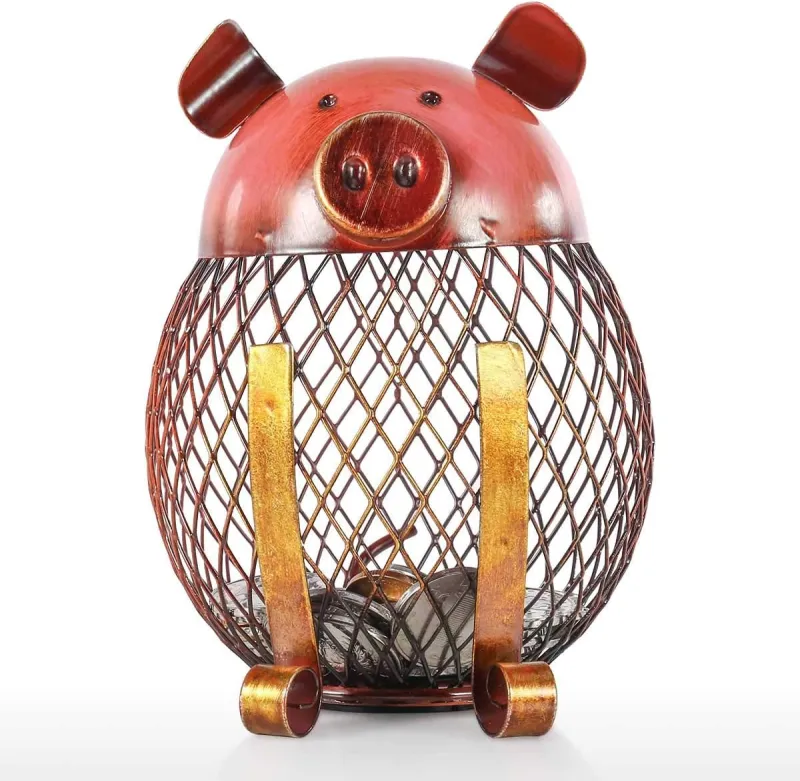
Photo: child piggy bank saving money toy store 1980s vintage, via m.media-amazon.com
Maybe it was a ten-speed bike. Maybe it was a particular record album, or a baseball glove with a specific player's name on it, or one of those early video game cartridges that cost fifty dollars and might as well have been fifty thousand. Whatever it was, you wanted it with a focused, almost obsessive intensity that modern children — swimming in an ocean of instant access — rarely get to experience.
You saved your allowance. You did extra chores. You checked the price tag at the store on three separate occasions just to confirm it hadn't changed. You calculated and recalculated how many more weeks until you could afford it. And when the day finally came and you walked out of the store carrying the thing you'd been thinking about for months, the feeling was unlike anything that came before or after.
That feeling has a name in psychology. And it turns out we've spent the last thirty years systematically engineering it out of childhood — and out of adult life too.
The Long Game of Wanting
For most of the 20th century, the rhythm of childhood desire was governed by scarcity and time. Allowances were small. Toys were relatively expensive. The gap between wanting something and having it was measured in weeks or months, not minutes.
A kid in 1975 who wanted a Schwinn ten-speed might spend the better part of a summer working toward it — mowing lawns, saving birthday money, negotiating with parents for advance payment on future chores. The bike wasn't just a bike when it finally arrived. It was a project. It was evidence of something. That child had demonstrated patience, planning, and persistence before they ever threw a leg over the seat.
The same dynamic played out across every category of childhood want. The KISS album you saved for after hearing it at a friend's house. The Atari game your parents wouldn't buy but you could earn. The Air Jordans that cost more than any reasonable allowance could cover quickly, which made them feel like a genuine achievement when you finally laced them up.
Nobody designed this as a character-building exercise. It was just the economic reality of the time. But the side effects were profound.
What the Psychology Actually Says
Delayed gratification has been studied seriously since the 1960s, most famously through Stanford psychologist Walter Mischel's marshmallow experiments — where children who could resist eating a marshmallow immediately in order to receive two later showed better outcomes across a range of life measures. The research is more nuanced than the popular version suggests, but the core finding holds: the ability to tolerate waiting in pursuit of a larger reward is a genuinely useful cognitive skill.
 Photo: Walter Mischel, via www.babelio.com
What's less often discussed is the flip side: the quality of the reward itself changes when you've waited for it. Psychologists call this the reward prediction error — the brain's dopamine response is amplified not just by getting something good, but by getting something you've been anticipating. The longer the anticipation, the stronger the neural reward signal when the moment arrives.
In plain terms: things you wait for feel better than things you get instantly. This isn't nostalgia. It's neuroscience.
Researchers have also documented what happens when that anticipation cycle is short-circuited. A 2021 study found that people who received something immediately reported lower satisfaction with it than those who waited, even when the object was identical. The waiting was part of the experience. Remove it and you remove something real.
One Click and It's Already Forgotten
The modern purchasing experience has been optimized to eliminate every point of friction between desire and acquisition. Amazon's one-click ordering. App Store downloads that take eleven seconds. Streaming services that make any song, movie, or album available the moment you think of it.
This is genuinely convenient. Nobody is arguing that friction is valuable for its own sake. But the elimination of waiting has had a consequence that the convenience economy doesn't advertise: the things we get instantly tend to mean less to us.
Parents today frequently describe the phenomenon of children unwrapping Christmas gifts with frantic speed, moving from one to the next before the first has been properly examined. The abundance itself becomes numbing. When everything is available immediately and in unlimited quantity, nothing feels particularly special. The object that would have been treasured for years becomes last month's thing within weeks.
Digital goods have pushed this even further. A downloaded song takes up no physical space, requires no financial sacrifice proportionate to its value, and can be replaced instantly if deleted. Compare that to a teenager in 1983 who saved for two weeks to buy Bruce Springsteen's Born in the USA on vinyl — who read the liner notes obsessively, who knew every track and its running time, who handled the record carefully because replacing it would mean starting the savings cycle over again. That album meant something because something was given for it.
The Things Kids Kept Forever
There's a telling pattern in how people describe childhood possessions that were saved for versus those that were simply given or bought without ceremony. The saved-for items appear in memories with extraordinary specificity — the exact color, the smell of the store, what the weather was like the day they finally brought it home. The given items blur together.
Attachment, it turns out, is partly a function of effort. We love things more when we've worked for them. This is true of relationships, of skills, of careers — and it's true of a ten-speed bike or a baseball glove. The investment of time and anticipation creates a bond that instant acquisition simply cannot replicate.
This isn't an argument for making children's lives harder. It's an observation that something genuinely valuable was embedded in the old economy of waiting — something that shaped how kids related to objects, to effort, and to the satisfaction of a goal achieved.
Reclaiming the Wait
Some families are pushing back deliberately. Allowance-based saving systems that require kids to wait for what they want. Wishlists that sit for thirty days before a purchase is made. The intentional reintroduction of friction into a frictionless world.
It feels almost countercultural now — telling a child they have to wait for something they could have today. But the evidence suggests the wait is doing something. Building something. Creating a relationship with the object, and with the idea of earning, that instant delivery quietly destroys.
The toy you saved three months for never really left you. That might be the point.