The Recipe Card at the Bottom of the Drawer: What America Lost When Cooking Stopped Being Inherited
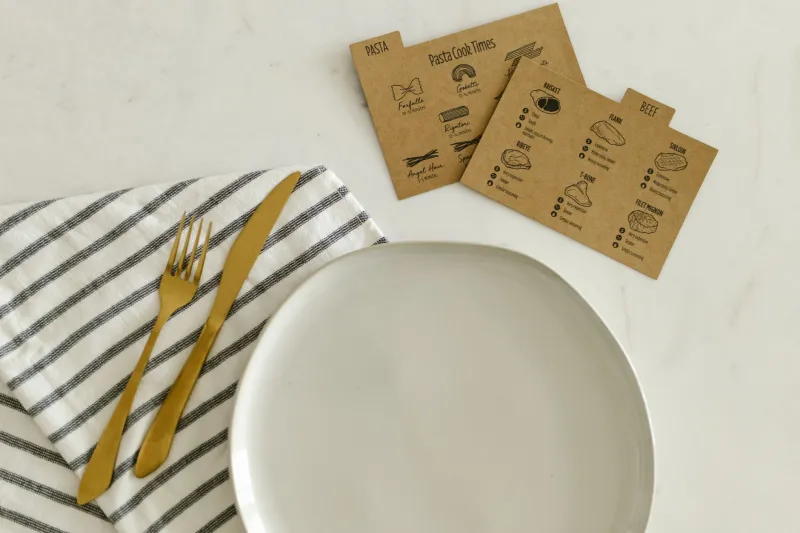
Most people who grew up with a grandmother who cooked can tell you exactly what her kitchen smelled like. They can probably name three or four dishes she made that nobody else has ever quite replicated. And if they're lucky, there's a box somewhere — a recipe box, or a battered notebook, or a three-ring binder held together with a rubber band — that contains her handwriting on index cards spotted with vanilla extract and tomato paste.
Those cards are a specific kind of artifact. Not just instructions for making food, but evidence that someone stood in a kitchen and figured something out, adjusted it over years, and thought it was worth writing down for whoever came next.
That tradition is mostly gone now. And the thing that replaced it is a lot shinier and a lot less meaningful.
How Cooking Knowledge Used to Travel
For most of American history, cooking wasn't a skill you acquired through media. It was something you absorbed by being in the room while someone else did it. You watched your mother make biscuits on Saturday mornings. You stood next to your grandmother while she rolled pie dough and listened to her explain — without measuring anything — why the butter needed to be cold and the water needed to be ice cold and the whole thing needed to be handled as little as possible.
The knowledge transferred through observation, repetition, and conversation. Recipes, when they were written down at all, were often shorthand — reminders for someone who already knew most of the method, not instructions for a beginner. "Add flour till it feels right" is a direction that only makes sense once someone has shown you what right feels like.
This system worked because cooking was embedded in daily life. Women — and it was mostly women, which is its own complicated history — cooked out of necessity and passed their knowledge along out of love and practicality. The recipe wasn't a product. It was a relationship expressed through food.
The Slow Unraveling
The shift didn't happen overnight. It started, arguably, with the postwar industrialization of American food. Processed ingredients, canned goods, and convenience products began replacing from-scratch cooking in the 1950s. Betty Crocker and her contemporaries stepped in to fill the gap, translating home cooking into standardized, repeatable recipes designed for the new American kitchen stocked with packaged goods.
 Photo: Betty Crocker, via sublimecake.com
This wasn't all bad. It democratized cooking in some ways, made it less exhausting, and helped working families put dinner on the table faster. But it also began the process of separating cooking knowledge from its source — the actual human beings who had developed it over generations.
Cookbooks became the dominant transmission mechanism. Then cooking shows. Then food blogs. Then YouTube tutorials. Each step moved the knowledge further from the kitchen and closer to the screen, and made it more curated, more performative, and less personal.
The Meal Kit as the Logical Endpoint
The meal kit subscription service is, in a certain light, the logical conclusion of this trajectory. Companies like HelloFresh and Blue Apron don't just give you a recipe — they give you pre-portioned ingredients, professionally tested instructions, and a guaranteed outcome, provided you follow directions precisely. The variables have been engineered out. You can't really fail, and you can't really improvise.
The marketing pitches this as empowerment. You're cooking! You made that! But the skill being practiced is closer to assembly than cooking. You're not learning to taste and adjust. You're not learning what to do when the recipe doesn't work. You're not building the intuitive, embodied knowledge that comes from actually understanding why food behaves the way it does.
And crucially, you're not learning anything you could teach someone else without the box.
The meal kit is designed to create a recurring customer, not a competent cook. That's not a conspiracy — it's just a business model. But it's worth being clear about what it produces.
What the Grease Stains Meant
There's a researcher named Robin Wall Kimmerer who writes about the way indigenous plant knowledge gets lost when it stops being transmitted through relationship and starts being stored in databases. The information survives, technically. But something essential about it — the context, the feeling, the judgment — doesn't translate.
 Photo: Robin Wall Kimmerer, via www.palatinelibrary.org
Handwritten recipe cards work similarly. The grease stain in the corner isn't a flaw. It's data. It tells you this recipe got made a lot, and that whoever made it was in the middle of cooking when they reached for the card. The margin note that says "less salt than it says" is a generation of calibration compressed into five words. The card itself is an argument that this dish is worth the trouble.
A PDF from a food influencer's website doesn't carry any of that. It's been tested for accuracy and photographed for Instagram and optimized for search engines. It might produce excellent food. But it has no memory.
What's Still Possible
The tradition isn't entirely dead. There are families who still cook together, still pass recipes by demonstration, still have the box with the index cards. Farmers markets and community cooking classes and food co-ops keep some of this alive at the edges. The sourdough revival that swept the country during the pandemic was, in part, a hunger for exactly this kind of tactile, patient, inherited knowledge.
But these are counter-currents against a strong tide. The food system — industrial agriculture, restaurant delivery apps, subscription meal services — is structured around the premise that cooking is a problem to be solved rather than a practice to be cultivated.
That premise is convenient and profitable and, in the short term, entirely understandable. Life is busy. Dinner still needs to happen.
But somewhere in the swap — from handwritten card to branded pouch — we traded a form of cultural memory for a subscription fee. The food might taste fine. It just doesn't taste like anyone's grandmother.
And that's a loss worth naming, even if it's hard to put a price on it.