The Mystery Nobody Could Solve: When Getting a Diagnosis Was a Years-Long Quest
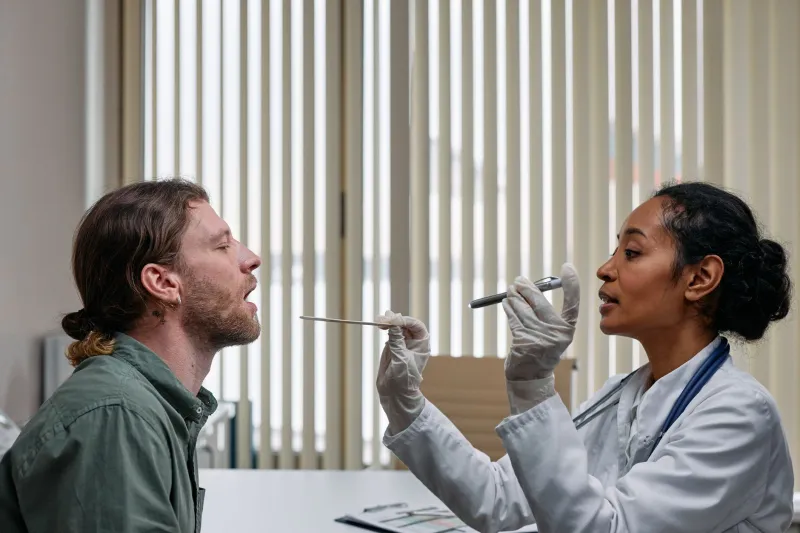
Imagine waking up every day with symptoms that nobody can explain. You're exhausted, in pain, or losing abilities you once took for granted — and every doctor you visit shrugs, orders a test you've already had, and refers you to someone else. For millions of Americans in the mid-twentieth century, that wasn't a nightmare. It was just Tuesday.
Getting a diagnosis, particularly for anything unusual, used to be one of the most grueling experiences a person could face. Not because doctors were incompetent, but because the tools simply didn't exist. The knowledge was out there — locked inside journals, textbooks, and the minds of a handful of specialists scattered across the country — but reaching it required time, money, and a certain stubborn refusal to give up.
The Reference Desk as a Medical Lifeline
Before the internet turned every smartphone into a medical library, patients who suspected something was wrong often did something that sounds almost quaint today: they went to the public library. Librarians, particularly those working in larger city branches, became unlikely allies in the diagnostic process. A patient might arrive with a scribbled list of symptoms and leave three hours later with photocopied pages from the Merck Manual or a medical encyclopedia that cost more than most families earned in a month.
These weren't idle Google sessions. People were genuinely trying to decode their own bodies using resources that were dense, technical, and written for physicians. Some got lucky. Many got more confused. And almost all of them eventually had to accept that the final answer — if it came at all — would require access to a specialist who might be located in a city they'd never visited, with a waiting list that stretched months into the future.
Referrals moved by mail. Test results took weeks. A patient with a rare autoimmune condition in rural Ohio in 1965 might wait two years just to sit in front of someone who had seen their particular constellation of symptoms before.
The Specialist System and Its Bottlenecks
American medicine organized itself around specialization throughout the twentieth century, which was genuinely transformative for common conditions. Cardiologists saved lives. Oncologists extended them. But the system had a structural flaw that nobody talked about much: it worked beautifully when you already knew what was wrong with you, and it worked terribly when you didn't.
Navigating from primary care to the right specialist required a kind of diagnostic intuition that general practitioners didn't always have. Miss the turn — send a patient to a rheumatologist when they needed a neurologist, for example — and months could evaporate before anyone realized the mistake. There was no central record, no shared database, no algorithm suggesting the next logical step. Just a phone call, a referral letter typed by a secretary, and a patient waiting by the mailbox.
For families without good insurance or the means to travel, the situation was worse. Rare conditions disproportionately went undiagnosed in communities that couldn't afford the diagnostic marathon. The knowledge existed somewhere. It just wasn't accessible to everyone who needed it.
What Changed Everything
The transformation didn't happen all at once. It arrived in waves. The digitization of medical records in the 1990s started connecting information that had previously lived in isolated paper files. Online symptom checkers — clunky and often alarmist at first — gave patients a starting point that hadn't existed before. Then genetic testing became affordable. Imaging technology improved. Lab results that once took a week started coming back in hours.
And then came the internet in full force, and with it a shift that fundamentally altered the patient-doctor dynamic. For the first time in history, a person sitting in a waiting room in rural Kansas could access the same published research as a physician at Johns Hopkins. They could find message boards full of people with identical symptoms. They could arrive at an appointment not as a passive recipient of information, but as an active participant in their own diagnosis.
 Photo: Johns Hopkins, via www.baulinks.de
WebMD, for all the jokes about it convincing people they have terminal illnesses, represented something genuinely radical: the democratization of medical knowledge. Suddenly, the information wasn't the exclusive property of the people with the degrees.
The Gain, and the Thing We Quietly Lost
The numbers are striking. Conditions that once took an average of seven years to diagnose — certain autoimmune diseases, rare genetic disorders, neurological conditions — are now being identified in months or even weeks. Genetic panels can flag predispositions before symptoms appear. AI-assisted imaging catches things the human eye misses. The diagnostic odyssey that defined so many patients' lives for so long is becoming genuinely shorter.
But something shifted in the exam room along the way. When patients arrive having already self-diagnosed via Reddit threads and symptom checkers, the conversation changes. Sometimes that's empowering — a patient who pushed for a specific test that their doctor hadn't considered, and turned out to be right. Sometimes it creates friction, or sends both patient and physician down a rabbit hole that wastes the very time the technology was supposed to save.
The librarian who spent an afternoon helping a confused patient decode a medical encyclopedia was doing something more than providing information. She was sitting with someone in their uncertainty. That particular kind of human presence — unhurried, focused, genuinely trying to help — is harder to find now that the information itself is everywhere.
The mystery gets solved faster. The journey, for better and worse, looks nothing like it used to.