The Doctor Who Knew Your Father's Heart: How America Traded Lifelong Care for a Waiting Room Full of Strangers
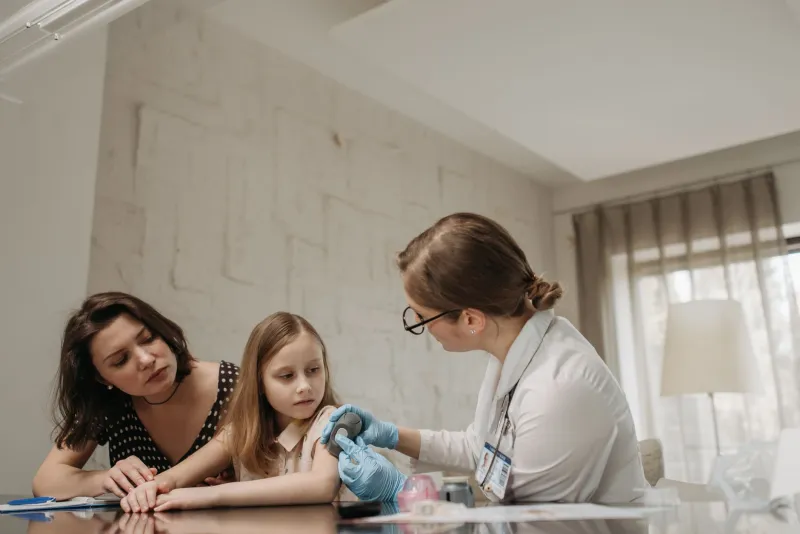
The Doctor Who Knew Your Father's Heart: How America Traded Lifelong Care for a Waiting Room Full of Strangers
Somewhere in a box in your grandparents' attic, there might be a Christmas card from their doctor. Not a form letter from a practice. An actual card, signed by hand, from the man who delivered their children, treated their pneumonia, and once made a house call at 10 p.m. on a Tuesday because something didn't sound right over the phone.
That doctor knew things no chart could capture — the way your grandfather always downplayed pain, the fact that heart disease ran three generations deep on your grandmother's side, the subtle shift in her color that meant something was off before any test confirmed it. He wasn't just a physician. He was a keeper of medical memory.
That era is gone. And the loss is bigger than most people realize.
When One Doctor Knew Everything
Through much of the mid-20th century, the family physician was a fixture of American life in the same way the local barber or the corner grocer was. You didn't shop around. You didn't check networks. You went to Dr. Henderson because your parents went to Dr. Henderson, and someday your kids would too.
This wasn't just sentimentality — it was medicine working the way it was designed to. Continuity of care, as researchers now call it, meant that a physician built a living record of a patient over years and decades. They tracked slow changes. They noticed when blood pressure crept up gradually in a way that a single-visit snapshot would miss entirely. They knew which symptoms were normal for you and which were red flags.
Studies have consistently shown that patients with a long-term primary care physician have better health outcomes, lower rates of hospitalization, and earlier detection of serious conditions like cancer and cardiovascular disease. One 2019 study published in The BMJ found that longer relationships with a GP were directly associated with lower mortality rates. The relationship itself was medicine.
 Photo: The BMJ, via e7.pngegg.com
How the System Came Apart
The unraveling didn't happen overnight. It came in waves.
First, insurance networks began dictating which doctors patients could see, severing relationships that had lasted decades with a single policy change. Then managed care models in the 1980s and 90s restructured how physicians were paid, rewarding volume over relationship-building. A ten-minute appointment replaced a thirty-minute conversation. The paperwork multiplied. The personal shrank.
At the same time, the rise of specialization pulled medicine away from the generalist model. Conditions that a family doctor once managed holistically — diabetes, hypertension, chronic pain — were increasingly handed off to specialists who saw only one piece of the puzzle. The result was a system where a single patient might see five or six physicians a year, none of whom had a complete picture.
Then came urgent care chains. Then telehealth. Then the pandemic, which accelerated remote medicine in ways that made convenience the priority and continuity an afterthought. Today, it's entirely possible — common, even — to spend a decade of your adult life never seeing the same doctor twice.
What Gets Lost in the Gap
Here's what doesn't show up in an intake form: the fact that you minimize symptoms when you're anxious. That you only come in when something is really wrong. That your mother had the same kind of fatigue before her diagnosis at 54.
A doctor who has known you for fifteen years carries that context automatically. A physician meeting you for the first time has to start from scratch — and in a twelve-minute appointment, they simply can't rebuild what took years to accumulate.
The diagnostic consequences are real. Gradual changes in lab values, subtle shifts in mood or energy, the kind of slow deterioration that only becomes visible over time — these are the things that fall through the cracks of a fragmented system. Early-stage conditions that a longtime physician might have caught in passing get missed until they become harder to treat.
There's also the trust factor. Research shows patients are more likely to disclose sensitive information — mental health struggles, substance use, sexual health concerns — to a physician they've known for years. Transparency drives better care. When every visit is with a stranger, that transparency erodes.
The Human Cost Nobody Measures
Beyond outcomes, there's something harder to quantify: the comfort of being known.
For elderly patients especially, a longtime doctor represented a form of continuity in a world that was constantly changing around them. Someone who remembered who they were before the illness, before the aging, before the fear. That's not a small thing. It's the difference between feeling like a patient and feeling like a person.
Some primary care physicians are fighting to reclaim that model. Direct primary care practices — where patients pay a flat monthly fee directly to a doctor, bypassing insurance entirely — are growing in popularity precisely because they make room for longer appointments and real relationships. Concierge medicine offers something similar for those who can afford it.
But for most Americans, those options are out of reach. The default experience is still the waiting room full of strangers, the rushed handoff, the chart that never quite tells the whole story.
A Different Kind of Progress
Medicine has advanced in extraordinary ways. The drugs are better. The imaging is better. The surgical outcomes would have seemed miraculous to a physician practicing in 1955. Nobody is arguing for a return to the era of limited diagnostics and guesswork.
But somewhere in the sprint toward specialization and efficiency, American healthcare lost something that turns out to have been genuinely therapeutic: the doctor who knew your name before you said it, who asked about your sister because he remembered she'd been unwell, who noticed — just noticed — that something was different about you today.
That kind of medicine didn't just treat disease. It prevented it. And we gave it up without ever quite deciding to.