The Night the Lights Came On and Never Went Off: How Electric Light Quietly Stole America's Sleep
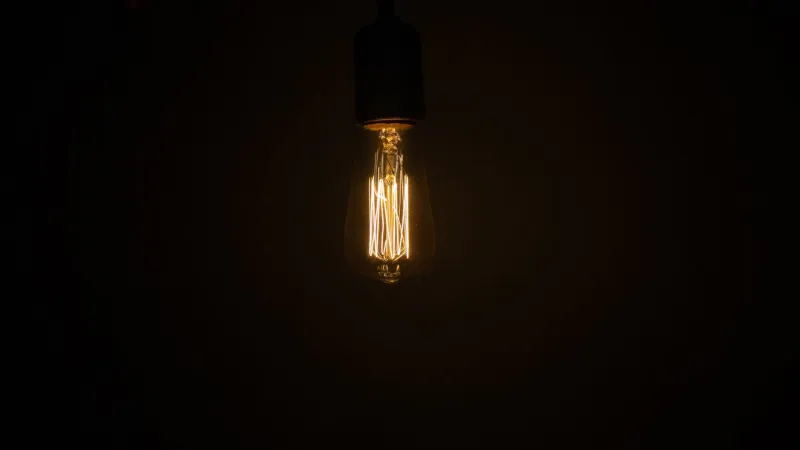
The Night the Lights Came On and Never Went Off: How Electric Light Quietly Stole America's Sleep
Picture an American household in 1890. Dinner is finished. The kerosene lamp is lit, casting a warm, limited glow across the kitchen table. By eight or nine in the evening, the family is winding down — not because they're lazy, but because the darkness outside is simply doing what darkness does. The body takes its cues from the available light, and the available light is saying: time to rest.
Now picture 2025. The bedroom ceiling fan hums above a person scrolling through their phone at midnight, the blue-white light of the screen inches from their face. Somewhere in the background, a TV plays. The streetlight outside bleeds through the curtains. The body is getting the same message it's been getting for the past six hours: it's still daytime. Keep going.
Between those two images lies one of the most consequential and least-discussed transformations in American health history.
Before the Grid, the Body Was in Charge
For the vast majority of human existence, including most of American history, light was scarce and expensive. Candles cost money. Oil lamps required fuel. Even in the mid-1800s, artificial light was something you used deliberately and sparingly. You didn't leave a lamp burning in an empty room. You gathered under the one good light source and made use of it, and when the evening got late, you stopped.
This wasn't just thriftiness. It was physiology in action. The human body runs on a circadian rhythm — an internal clock synchronized primarily by light. When daylight fades, the brain begins producing melatonin, the hormone that prepares the body for sleep. When light disappears entirely, that process accelerates. In a pre-electric world, the natural environment essentially managed this process automatically. The sun went down; the body followed.
Historical sleep research, including analyses of pre-industrial diaries and medical records, suggests that people in earlier centuries often slept in two distinct phases — an early sleep, a period of wakefulness in the middle of the night, and a second sleep before dawn. The point isn't that they slept more or better in every respect, but that their sleep patterns were tightly coupled to natural light in ways that modern life has completely severed.
Thomas Edison's Unintended Legacy
Electric light arrived in American homes gradually, starting in the 1880s and accelerating through the early twentieth century. By the 1930s, the majority of urban American households had electric lighting. Rural electrification, pushed aggressively by the New Deal, extended the grid through the 1930s and 40s.
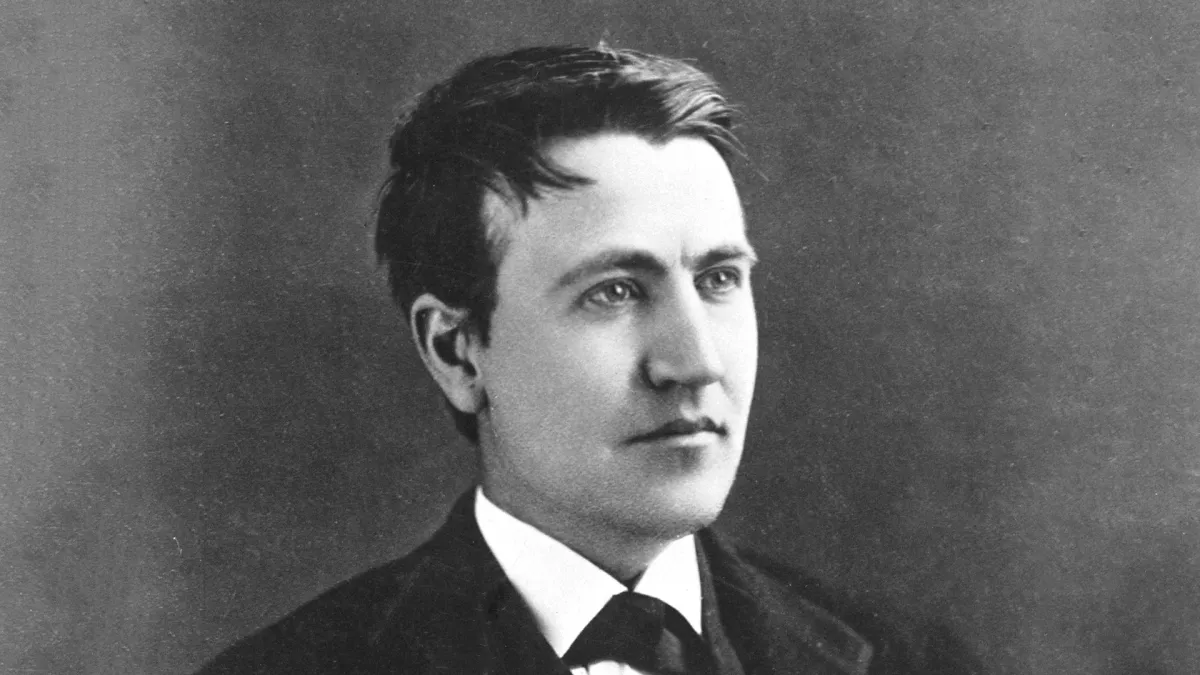 Photo: Thomas Edison, via cdn.britannica.com
The immediate reaction was almost universally enthusiastic. Evenings became usable. Reading, socializing, working — all of it could now extend past dark without the expense and inconvenience of oil lamps. Factories could run night shifts. Stores could stay open later. The economy didn't have to stop when the sun went down, and it didn't.
What nobody was thinking about — because the science didn't exist yet to think about it — was what happens to a species that evolved under predictable cycles of light and dark when you suddenly remove the dark.
The answer, it turns out, is: a lot of things, and most of them aren't good.
The Century-Long War on Sleep
The electrification of America didn't just extend the day. It gradually restructured the American relationship with sleep itself — transforming it from a biological necessity into something closer to an inconvenience to be minimized.
This happened in stages. Electric light made late evenings possible. Radio made them entertaining. Television made them irresistible. The 24-hour economy — made possible by artificial light — created jobs and social expectations that pushed schedules further into the night. And then the smartphone arrived and put a light source directly in front of every American's face at the precise moment they were supposed to be preparing for sleep.
Each step was enabled by the one before it. The logic of artificial light, once introduced, just kept extending itself.
The CDC now classifies insufficient sleep as a public health epidemic. Roughly one in three American adults reports regularly not getting enough sleep. The downstream effects are extensive and well-documented: impaired immune function, elevated risk of cardiovascular disease, metabolic disruption that contributes to obesity and type 2 diabetes, increased rates of anxiety and depression, and compromised cognitive performance across virtually every measure.
Researchers studying circadian biology — a field that earned its founders a Nobel Prize in 2017 — have made clear that the timing of sleep matters as much as the duration. Light exposure at the wrong times of day doesn't just make it harder to fall asleep; it disrupts the body's internal clock in ways that affect hormone regulation, cellular repair, and metabolic function throughout the entire day.
The Irony of the 24-Hour Society
Here's the uncomfortable part of this story: the productivity gains that artificial light was supposed to enable have, in significant measure, been offset by the health costs of the sleep disruption it caused.
A workforce running chronically short on sleep is not a productive workforce. The research on this is clear and consistent. Sleep deprivation impairs judgment, slows reaction time, reduces creativity, and increases error rates. The RAND Corporation estimated in 2016 that sleep deprivation costs the US economy roughly $411 billion a year in lost productivity.
 Photo: RAND Corporation, via 03441788-8038-4e52-ad4a-ff0a9d321238.selcdn.net
We extended the day so we could get more done, and then we got less done because we were too tired to do it well. The math doesn't work out the way Edison imagined.
Relearning What Darkness Is For
The good news — if there is good news here — is that awareness is growing. Sleep medicine is a legitimate and expanding field. Circadian rhythm research is informing everything from hospital shift scheduling to school start times. Some cities are reconsidering their street lighting. The American Academy of Sleep Medicine has been pushing for later high school start times for years, and some states are beginning to listen.
On a personal level, the advice from sleep researchers is remarkably consistent: limit artificial light exposure in the evenings, especially blue-spectrum light from screens; keep sleeping spaces dark; try to maintain regular sleep and wake times. In other words: try to give your body some approximation of the conditions it evolved under.
It's not a perfect solution. The grid isn't going anywhere, and neither are smartphones. But the recognition that light — specifically, its constant and unmanaged presence in modern life — is a health variable worth taking seriously represents real progress.
For most of human history, darkness was just what happened at night. It did its job without anyone having to think about it. We built our way out of that, and now we're slowly learning that the darkness was doing something we didn't know we needed.
The light that felt like pure freedom came with a cost that took a century to fully add up.