The Lost Art of the Love Letter: When Romance Required a Pen and Three Weeks
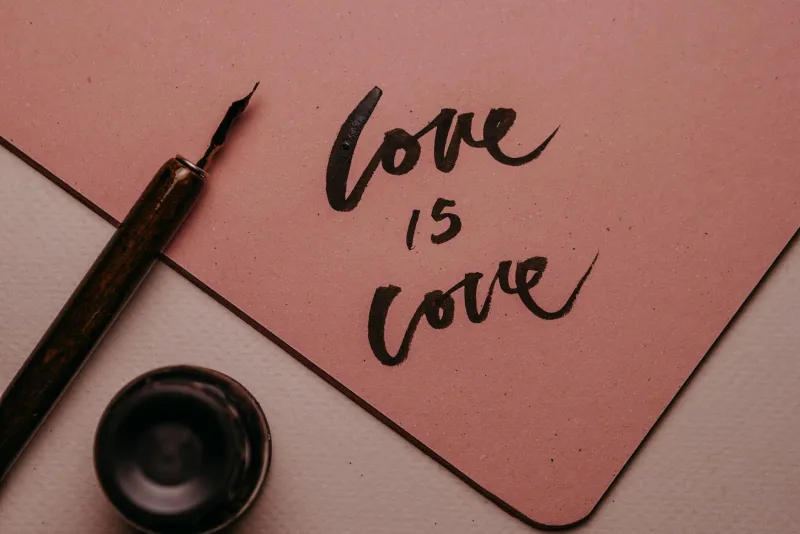
When Hearts Spoke in Cursive
In 1952, Mary Patterson of Cedar Rapids, Iowa, met her future husband through a letter. Not a dating app message or a Facebook comment, but an actual handwritten letter that arrived in her mailbox three weeks after he'd mailed it from his Army base in Korea. By the time they married two years later, they'd exchanged 247 letters — each one a small work of art, written on good paper with fountain pen ink that still hadn't faded when their granddaughter found them in the attic decades later.
This wasn't unusual. It was how America fell in love.
For most of the 20th century, written correspondence formed the backbone of American social life. People maintained networks of pen pals across the country, exchanged holiday cards with hundreds of acquaintances, and conducted serious romantic relationships entirely through the mail. The ritual was elaborate: selecting the right stationery, crafting sentences that would be read and reread, waiting anxiously for the postman's arrival.
The Social Network That Required Stamps
Before the internet connected everyone instantly, Americans built their social circles through what we might now call analog networking. High school students collected pen pal addresses from magazines like Seventeen and Popular Mechanics. Soldiers overseas maintained connections with entire hometowns through round-robin letters that circulated among families. Even business relationships often began with formal introductory letters, complete with personal references and character testimonials.
The numbers tell the story: in 1950, the average American household sent 127 personal letters per year. By 1990, that number had dropped to 43. Today, it's closer to 3 — and those are mostly thank-you notes from weddings.
What filled the gap wasn't just email and text messages. It was an entirely different approach to human connection. Where letter writing demanded patience, reflection, and careful word choice, digital communication prizes speed and convenience. The average text message contains 7 words. The average love letter from the 1940s contained 247.
When Distance Made Hearts Grow Fonder
The forced delays of mail delivery created a unique rhythm of relationship building. When it took three days for a letter to travel from New York to Los Angeles — and six weeks to reach Europe — every exchange carried weight. People couldn't fire off angry responses in the heat of the moment. They couldn't flood someone's inbox with desperate messages. They had to think, plan, and choose their words carefully.
 Photo: New York, via admiringlight.com
This constraint bred a different kind of intimacy. Couples separated by war or work would spend hours crafting letters that captured not just events but emotions, dreams, and daily observations. They'd include pressed flowers, photographs, even samples of perfume. Each letter was an event, something to be savored and saved.
Compare this to modern romance, where the average couple exchanges 67 text messages per day, most of them logistical ("running late," "pick up milk," "where r u?"). The immediacy we've gained has come at the cost of anticipation — that delicious anxiety of waiting for someone's thoughts to arrive in your mailbox.
The Art of Slow Communication
Letter writing wasn't just about romance. It was how Americans maintained friendships across distances, conducted business relationships, and even settled family disputes. The process itself — sitting down with paper and pen, thinking through what you wanted to say, revising sentences before committing them to paper — forced a kind of mindfulness that's largely disappeared from modern communication.
People developed distinctive handwriting styles and letter-writing personalities. They collected beautiful stationery, invested in good fountain pens, and learned the social protocols of correspondence: when to use formal vs. informal language, how to begin and end letters appropriately, what topics were suitable for different relationships.
There were entire industries built around this culture. Stationery stores were as common as coffee shops. Greeting card companies employed teams of writers to craft sentiments for every possible occasion. The postal service was a lifeline, not just a way to pay bills.
What We Lost in Translation
Today's communication is undeniably more efficient. We can maintain relationships with hundreds of people simultaneously, share photos instantly, and coordinate complex plans in real time. But something was lost in the translation from analog to digital.
Modern research suggests that handwriting activates different parts of the brain than typing, leading to better memory retention and deeper emotional processing. The physical act of writing — feeling the pen move across paper, seeing words appear in your own hand — creates neural pathways that typing simply doesn't.
More importantly, the slower pace of letter writing allowed for a different quality of thought. When you couldn't delete and retype instantly, you had to organize your ideas before putting pen to paper. When you couldn't send follow-up messages immediately, you had to be complete and clear in your communication.
The Speed of Modern Hearts
Today's romantic relationships often begin and end faster than a single courtship-by-mail would have unfolded in 1950. Dating apps allow us to meet dozens of potential partners in a week. Text messages let us maintain constant contact. Video calls eliminate the mystery of long-distance relationships.
But speed isn't always progress. The couples therapists of today spend much of their time helping people slow down their communication — to think before texting, to have difficult conversations in person rather than over messages, to create space for reflection in their relationships.
In rushing toward instant connection, we may have lost something essential about human intimacy: the understanding that the best things are worth waiting for, that anticipation can be as sweet as satisfaction, and that some thoughts deserve better than a hastily typed message sent between meetings.
The love letters gathering dust in American attics weren't just correspondence — they were time capsules of a culture that understood the art of slow connection. Whether we can learn to recreate that patience in our hyperconnected age remains an open question.