The Deal That Fit in a Sentence
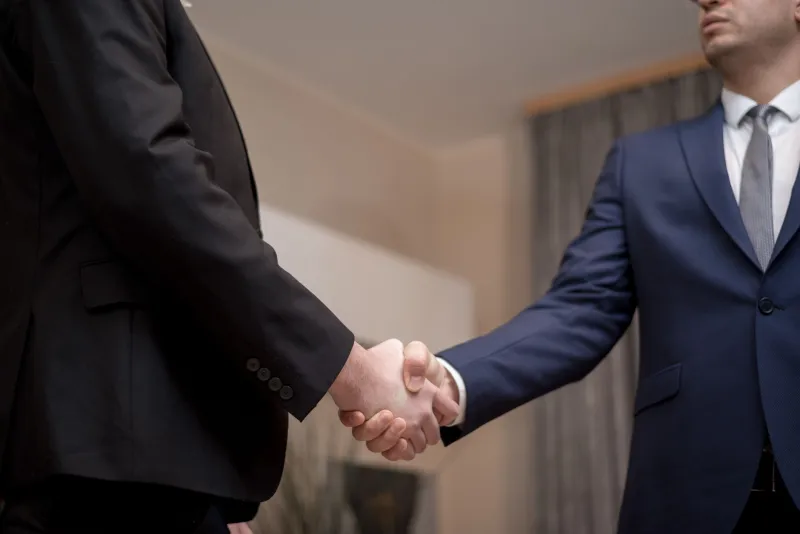
Somewhere in a small Ohio town in 1955, two men are standing in a driveway. One of them owns the hardware store on Main Street. The other wants to buy it. They talk for maybe forty-five minutes. They agree on a price. They shake hands. The deal is done.
There was no purchase agreement drafted that afternoon. No disclosure forms, no representations and warranties clause, no arbitration rider. The sale would eventually generate some paperwork — a deed has to be recorded — but the agreement itself lived between two people, in their word and their reputation. If either one broke it, the whole town would know by Friday.
This wasn't naivety. It was infrastructure. Social infrastructure, the kind that doesn't show up on balance sheets but holds entire economies together.
How Trust Used to Do the Work That Lawyers Do Now
Through much of the mid-20th century, American business — especially at the local and regional level — ran on reputation as currency. The man who backed out of a handshake deal didn't just lose the deal. He lost his standing. In a community where you bought your lumber from the same yard for thirty years, where your banker was your neighbor, where your business partner went to the same church as your parents, the social cost of betrayal was immediate and lasting.
Home purchases in smaller markets often closed with a handshake and a brief letter. Employment agreements were verbal in most industries. Farmers bought seed on a promise to pay after harvest. A general contractor might build an addition on your house based on a scribbled estimate and a nod. These weren't reckless arrangements — they were efficient ones, lubricated by the kind of trust that only exists when people share a long-term stake in the same community.
Even at higher levels of commerce, deals were famously lean on documentation. The New York diamond district, well into the modern era, conducted millions of dollars in transactions with a handshake and the Yiddish phrase mazal u'bracha — luck and blessing. No contracts. Default rates were extraordinarily low. The community enforced its own agreements better than any court could.
When the Paperwork Started Multiplying
The shift didn't happen overnight. It crept in through several doors at once.
Post-war economic expansion brought strangers into business with each other at unprecedented scale. When your business partner is someone you met at a trade show in Chicago rather than someone who grew up three streets over, the social enforcement mechanism doesn't exist. You need something else. You need paper.
Liability law expanded dramatically through the 1960s and 70s. Consumer protection legislation — much of it genuinely necessary — created new categories of legal exposure that businesses needed to document their way around. The professionalization of the legal industry made attorney involvement in transactions both more accessible and more expected. By the 1980s, having a lawyer review a contract wasn't a sign that you didn't trust the other party. It was just what you did.
And then came the internet, which industrialized distrust. When you buy something from a seller you'll never meet, in a state you've never visited, shipped from a warehouse that doesn't have a face, trust has to be engineered through rating systems, dispute resolution processes, and terms of service agreements that scroll for eleven minutes.
What 47 Pages Actually Costs You
Here's the part nobody talks about: the documentation economy is expensive, and not just in legal fees.
The average residential real estate transaction in America today generates somewhere between 100 and 180 pages of documents. Buyers sign things they don't read, acknowledging disclosures they don't understand, agreeing to arbitration clauses they couldn't explain if asked. The paperwork is so thick that it creates its own opacity — the opposite of the transparency it's supposedly designed to provide.
Small business formation, once a matter of registering a name and opening an account, now involves operating agreements, liability waivers, intellectual property assignments, and employment contracts drafted with an eye toward litigation that may never happen. The friction is real. Studies consistently show that regulatory and documentation burden falls hardest on small businesses and entrepreneurs, the very people who once thrived in a handshake economy.
And there's a subtler cost. When every agreement is lawyered into a document, it signals something about the relationship before it begins. You're telling your counterpart that you don't trust them to do what they say. Sometimes that's appropriate. But when it's the default, it changes the texture of economic life. It makes transactions colder. It makes partnerships more guarded. It makes the whole enterprise of building something with another person feel a little more like combat preparation.
The Nostalgia Trap — and the Real Question
It's easy to romanticize the handshake era. But the trust economy worked best for people who were already inside the circle — and that circle had walls. Women trying to start businesses, Black entrepreneurs seeking financing, anyone operating outside the dominant community's social network found that the informal system was often stacked against them. The handshake deal protected the people who already knew the right hands to shake.
The documentation era, whatever its costs, created channels for people who didn't have social capital to participate in economic life. A written contract is, in principle, enforceable regardless of who you know.
So the real question isn't which system was better. It's what we lost when we assumed that trust was always naive, and what it would take to build something that offers both protection and humanity. Some industries are trying — plain-language contracts, relationship-based lending, community investment funds. They're small experiments in recovering something that used to be ordinary.
The handshake didn't disappear because people became less trustworthy. It disappeared because the world got bigger and faster and more anonymous. Whether that trade was worth it probably depends on which side of the old circle you were standing on.