The Envelope on the Counter: When Money Was Something You Could Actually See
For most of American history, spending money meant handing it over — physically, visibly, with a small moment of reckoning every single time. Then cards arrived, then apps, then tap-to-pay, and the friction disappeared. So did something else.
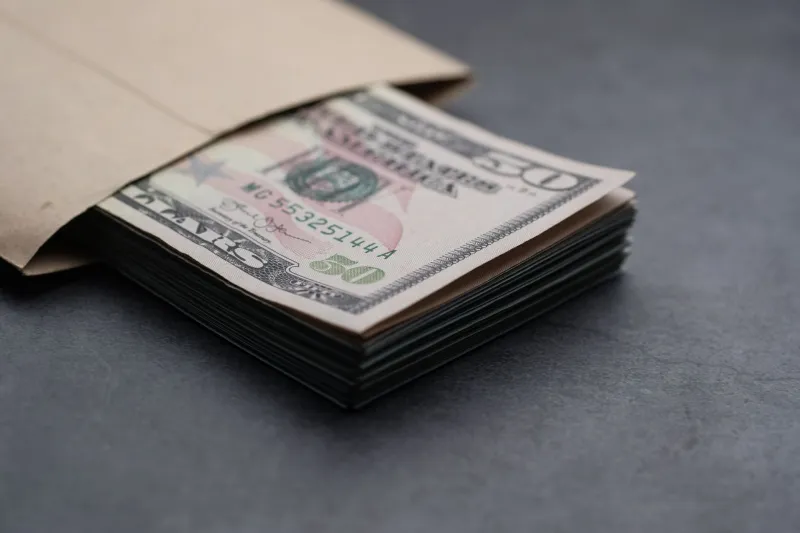
There's a specific memory that a certain generation of Americans carries around without quite realizing it. Friday afternoon. A paycheck cashed at the bank or the corner check-cashing place. Bills counted out, sorted, and divided into envelopes on the kitchen counter. One for rent. One for groceries. One for utilities. One, if there was anything left, for whatever came up. The system wasn't elegant. It wasn't optimized. But it worked, because you could see it. You knew exactly where you stood. When the grocery envelope got thin on Wednesday, you felt it.
That envelope system — sometimes called cash budgeting, sometimes just called how we did things — was a form of financial clarity that didn't require an app or a spreadsheet or a subscription to a money management service. It required only paper and counting.
The Paycheck as Physical Object
Before direct deposit became standard, getting paid was an event. You received a check, or in many working-class jobs well into the 1970s, an actual cash envelope sealed at the payroll window. You went to the bank on Friday, stood in line, and left with money in your hand. That act of conversion — labor exchanged for physical currency — had a weight to it, literally and psychologically.
Researchers who study consumer behavior have a term for what happened next: the pain of paying. When you hand over cash, your brain registers the loss in a way that a card swipe simply doesn't trigger. Studies from MIT and Carnegie Mellon have shown that people consistently spend more when using credit cards than when using cash for identical purchases. The physical act of releasing money activates something like a mild discomfort — not enough to stop you, but enough to make you pause, reconsider, maybe put one thing back.
That pause was doing real work in American households for generations. It wasn't a bug in the system. It was the system.
How the Friction Disappeared
Credit cards arrived in American wallets in the 1950s and 1960s, starting with charge cards for travel and entertainment and expanding into general-purpose credit through the Visa and Mastercard networks. Adoption was slow at first. Many Americans viewed credit with genuine suspicion — spending money you didn't yet have felt morally uncomfortable to a generation that had grown up during the Depression.
By the 1980s, that suspicion had softened considerably. Cards became convenient, then standard, then expected. The shift accelerated through the 1990s as debit cards arrived, offering the feel of a credit card with (theoretically) the discipline of a checking account. Then came online shopping, which made spending not just frictionless but invisible — a few clicks and a confirmation email, no physical exchange at all.
The smartphone finished the job. Apple Pay, Google Pay, Venmo, Cash App, buy-now-pay-later services that don't even ask you to think about the total — today's payment landscape is engineered, almost without exception, to remove every possible moment of hesitation between wanting something and having it.
This wasn't accidental. Reducing friction increases transaction volume. That's good for merchants, good for payment processors, and good for the platforms that sit in between. Whether it's good for the person spending the money is a different question.
What the Numbers Show
Americans are not managing money better in the cashless era. Total U.S. household debt hit a record $17.5 trillion in 2024. Credit card balances crossed $1.1 trillion for the first time in history. Personal savings rates, which averaged around 10 percent through much of the postwar era, have bounced between 3 and 6 percent for most of the past decade, with periodic dips below that.
None of this is solely caused by the disappearance of cash — economic conditions, wage stagnation, and the rising cost of housing and healthcare all play significant roles. But the relationship between payment method and spending behavior is well-documented enough that several European countries have actively legislated to protect cash access, partly on the grounds that it functions as a financial safeguard for lower-income populations.
In the U.S., that conversation has barely started.
The Invisible Poor and the Unbanked
Cash's disappearance hasn't been neutral across income levels. For the approximately 5.9 million American households that remain unbanked — disproportionately lower-income, disproportionately Black and Hispanic — the move toward cashless commerce isn't a convenience upgrade. It's a barrier.
Parking meters that only take apps. Transit systems phasing out cash fares. Restaurants that went card-only during the pandemic and never went back. Each of these small shifts, individually reasonable, collectively builds a world that's harder to navigate without a bank account and a smartphone. The informal cash economy — gig work paid in bills, neighborhood services, the small transactions that happen between people without going through any institution — gets squeezed out too.
There's a long history of informal cash economies doing real work in American life: babysitters, handymen, garage sales, the neighbor who mows lawns on weekends. These weren't just transactions. They were community infrastructure. They moved money between people in ways that didn't require anyone's approval or percentage.
What We Actually Lost
The case for cashless living is real. Cards are safer than carrying bills. Digital records make budgeting easier, in theory. Fraud protection exists. Contactless payment genuinely is faster at checkout.
But something got traded away in the process. The tactile relationship with money — the sense of it as a finite, physical thing that depletes and must be replenished — has been replaced by an abstraction. Numbers on a screen. A balance that updates in the background while you're not looking.
The envelope on the counter knew things. It knew when you were getting close to the edge. It couldn't be overdrawn with a tap. It didn't offer you a line of credit when it ran out. It just sat there, thin and honest, telling you exactly where things stood.
That kind of clarity is harder to buy than it sounds.