Twenty-Seven Prints and a Decision: What Photography Meant When It Cost Something
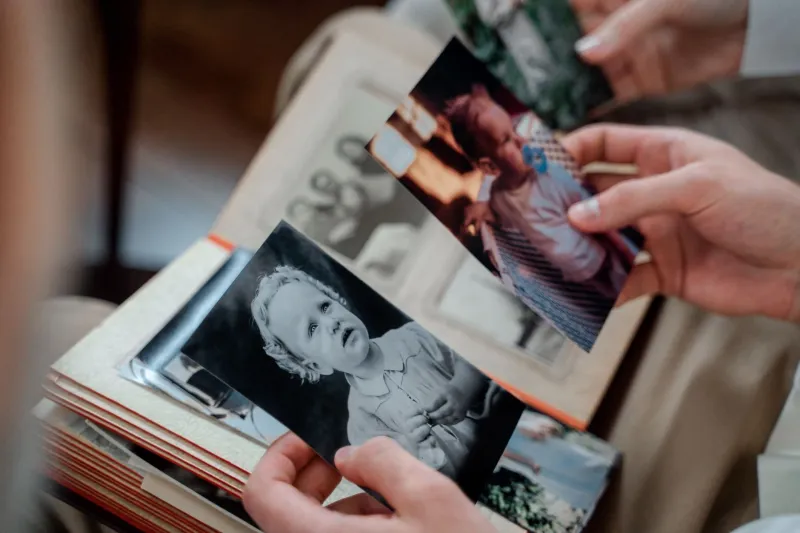
A roll of film gave you twenty-four, maybe thirty-six shots. You used them carefully, waited days to find out what you got, and kept the good ones forever. Now we shoot hundreds before breakfast and can't find a single one when we actually need it.
Somewhere in a shoebox, or a cedar chest, or the back of a closet in the house you grew up in, there's probably a stack of photographs. Real ones — printed on paper, slightly faded, some with dates stamped in orange on the back. A birthday party from 1988. A vacation where everyone is squinting into the sun. A Christmas where someone's eyes are closed and nobody cared enough to retake it because film was expensive and that was just how it went.
Those photos survived. They're still there. They have a physical presence in the world.
Now ask yourself: where are the pictures from last Thanksgiving?
The Economics of the Shot
Before digital photography arrived, taking a picture was a small financial commitment. A roll of 35mm film cost a few dollars. Developing it cost more — often $10 to $15 at a drugstore, sometimes more for one-hour processing. If you shot two rolls at a family reunion, you were spending real money just to find out whether you'd gotten anything usable.
That cost created discipline. You thought before you pressed the shutter. You waited for the moment to come together rather than shooting continuously and hoping something worked. You framed the shot in your head, asked people to move closer, told someone to put their arm around someone else. Photography was a small act of intention, repeated twenty-seven times per roll.
And then you waited. Dropping film off at the drugstore on a Monday and picking up the envelope on Thursday was its own ritual. Opening it was genuinely exciting — and sometimes genuinely disappointing. Blurry shots. Underexposed frames. The one where someone walked in front of the lens right at the moment. You kept those too, sometimes, because they were all you had.
The Album as Curation
Because prints cost money and took up physical space, people made choices. Not every photo made it into the album. Someone — usually a mother, often a grandmother — sat down with the envelope of prints and decided which ones were worth keeping in a visible way. The rest went back in the envelope. The best ones got slipped into plastic sleeves, arranged in rough chronological order, labeled with a Sharpie if you were organized, left mysterious if you weren't.
The result was a curated family archive. Not comprehensive. Not perfect. But selected. When you sat down with a photo album, you were seeing what someone had decided mattered. That act of curation was itself a form of storytelling — a statement about what this family valued, what moments they wanted to remember, who they were.
Wallet photos were the most curated of all. You chose one photograph of your child, your spouse, your grandchildren, and you carried it with you. One. You showed it to people when the moment called for it. It was a small, deliberate representation of love.
What Infinite Storage Actually Produces
The first consumer digital cameras arrived in the mid-1990s. They were expensive, low-resolution, and required a computer to do anything useful with the images. By the early 2000s, they were cheap and everywhere. By 2010, every smartphone had a camera better than anything most people had owned before.
The cost per photograph dropped to essentially zero. The constraint vanished.
The average American now takes somewhere between 150 and 200 photos per month on their smartphone, according to various estimates — and that's a conservative figure that doesn't account for heavy users. A family vacation might generate a thousand images in a week. A birthday party, a hundred. A Sunday brunch, thirty-five, because the light was good and you wanted to get it right.
Almost none of them get printed. A significant portion never get looked at again after the moment of capture. Studies on digital photo behavior consistently find that the vast majority of smartphone photos are never organized, rarely revisited, and almost never shared beyond a quick post or story that disappears in twenty-four hours.
The Library of Congress has a term for this: digital dark age. The paradox of abundant storage is that it produces less preservation, not more. Film photographs from the 1950s survive because people printed them, put them in albums, and kept the albums. Digital photographs from 2015 are already at risk — stored on phones that got upgraded, backed up to services that changed their pricing, sitting in formats that may not be readable in thirty years.
Memory and Meaning
There's a psychological dimension to this that's worth sitting with. Memory researchers have found that the act of photographing something can actually reduce how well you remember it — a phenomenon sometimes called the photo-taking impairment effect. When you outsource the memory to a device, your brain doesn't bother encoding it as deeply.
When photographs were scarce, the moments around them got remembered better. The effort of taking the photo — the deliberateness, the waiting, the anticipation — made the moment more significant. The photograph was a marker, not a substitute.
Now we photograph constantly, partly to remember and partly to signal. The image exists for the post, for the story, for the documentation of a life being lived in a particular way. Whether anyone goes back and actually looks at it is almost beside the point.
The Shoebox We'll Never Sort
Ask most Americans where their family photos live and you'll get one of two answers. Either they point to a physical collection — albums, shoeboxes, frames on the wall — that skews heavily toward images taken before 2010. Or they gesture vaguely at their phone, their Google Photos account, their iCloud storage that's always almost full.
The older collection has been looked at. The newer one probably hasn't.
This isn't an argument for going back to film, exactly. The accessibility of photography has democratized something real — more people document more of their lives, and that has genuine value. But there's something to be said for the version of photography that required you to make a decision, to choose the frame, to wait for the result, and to decide, finally, that this one was worth keeping.
Twenty-seven shots. You made them count. And somehow, that made them last.