The Anthem, the Static, and the End of the Day: How American TV Used to Say Goodnight
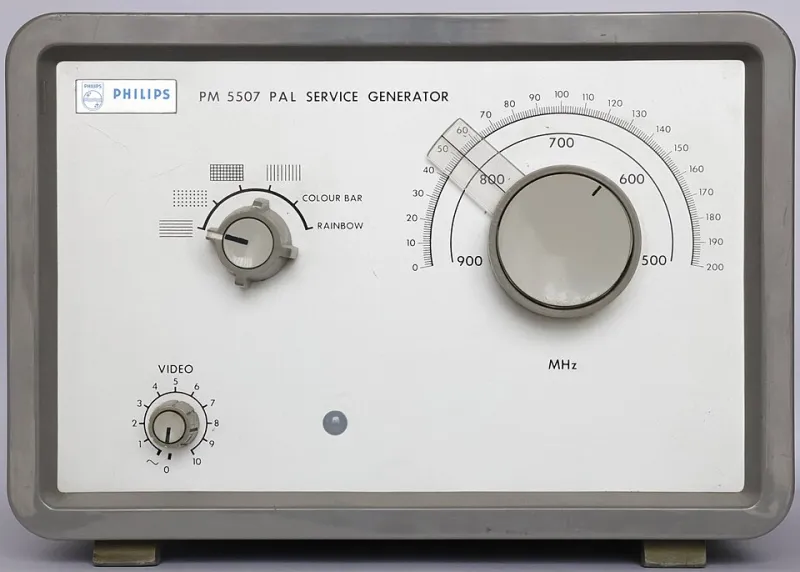
Photo: Alex P. Kok, CC BY-SA 4.0, via Wikimedia Commons
If you stayed up late enough in 1975, you eventually saw television do something that feels almost mythical today: it stopped.
Not paused. Not buffered. Not "are you still watching?" It simply ran out of programming, played a test pattern, and left you alone with a burst of white noise and a screen full of snow.
The Ritual of the Sign-Off
In the era before cable blankets and 24-hour news, most local stations across the US went off the air somewhere between 11:30 PM and 1:00 AM. The ending followed a script so consistent it became a cultural liturgy. The late movie would wrap. A station identification card would appear. Then came the sign-off sequence: a montage — often featuring the American flag, bald eagles, or rolling farmland — set to "The Star-Spangled Banner."
After the anthem, the screen cut to a test pattern or, on some stations, simply went black. The transmitter might power down entirely. If you kept watching, you got static — a hissing, grainy nothing that parents claimed would ruin the picture tube, and maybe it would.
For night owls, this was the television equivalent of a shopkeeper flipping the lock on the front door. The day was over whether you agreed or not.
Why TV Went to Bed
The reasons were practical. Broadcasting around the clock cost money — electricity, staff, transmitter time — and almost nobody was watching at 3 AM. Local stations were often small operations with a skeleton crew. Running a full schedule meant paying people to sit in a dark studio producing content for an audience of insomniacs and truckers.
So they didn't. The schedule had edges. It began in the morning with cartoons and farm reports, and it ended at night with the anthem. Television was, in the truest sense, an appointment — something you planned your evening around, because if you missed it, there was no catch-up, no replay, no next-day stream. Miss the late movie and it was gone.
That scarcity shaped families in ways that are easy to forget. Everyone in the house shared one screen, which meant everyone negotiated over it. Bedtimes aligned with broadcast times. Kids learned which shows aired on which nights because the lineup was fixed — the TV Guide wasn't a convenience, it was scripture.
The Slow Death of the Shutdown
The first cracks came from the edges of the dial. Independent stations and early cable channels discovered there was an audience for late-night reruns, old movies, and eventually, around-the-clock news. CNN launched in 1980 with a promise to never sign off. Other networks followed. Satellite delivery made the economics work: once the content existed, beaming it at 4 AM cost almost nothing.
By the early 1990s, the sign-off was a rarity in most markets. Today, the concept is so foreign that many viewers under 40 have never seen a test pattern outside of retro YouTube compilations. The anthem montage survives mostly as nostalgia content — a thing people watch on purpose, the way you might visit a museum.
What We Gained — and What Went Quiet
There's no argument for going back. On-demand access means a parent working the night shift can watch what they want when they want. A teenager in rural Montana has the same library as one in Manhattan. The midnight blackout was, for shift workers and night owls, a kind of exclusion dressed up as tradition.
But something real dissolved along with the static. When television ended, the day had a shape — a beginning, a middle, and an enforced ending that pushed people toward sleep, conversation, or bed. The anthem wasn't just patriotism; it was a period at the end of the sentence.
Now the sentence never ends. The screen offers infinity, and we scroll into it, one more episode, one more clip, one more hour. The old blackout was an annoyance, but it was also a boundary — a nightly reminder that time was finite and the day was done.
Maybe that's the strangest shift of all. We didn't just gain more television. We lost the last thing in American life that told everyone, at the same moment, that it was time to stop.