When Every Graduate Could Balance a Checkbook: America's Lost Financial Education
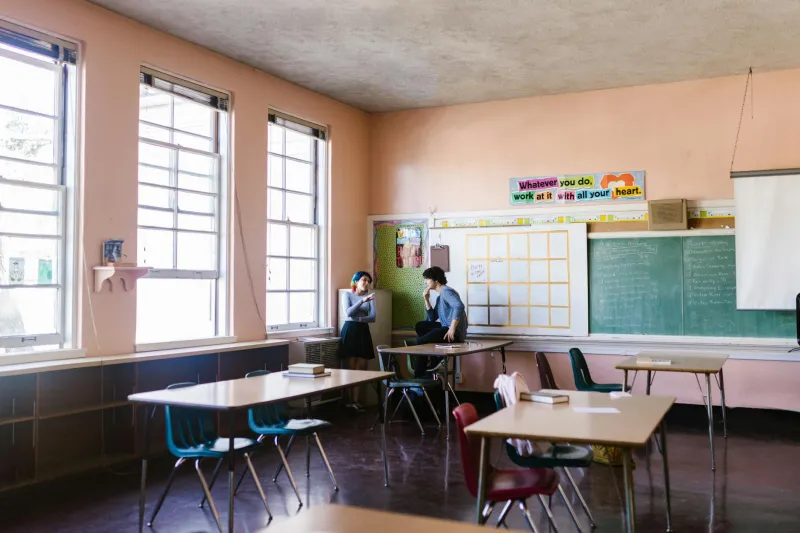
The Classroom That Taught Real Life
Step into any American high school in 1955, and you'd find something that seems almost revolutionary today: students learning how money actually works. Not theoretical economics or abstract business principles, but practical financial skills they'd use every week for the rest of their lives.
Bookkeeping was a standard class, not an elective. Students learned to balance ledgers by hand, track expenses, and understand the difference between assets and liabilities. Home economics wasn't just cooking and sewing – it included household budgeting, comparison shopping, and understanding credit terms. Even basic mathematics focused heavily on practical applications: calculating interest, understanding percentages, and working with real-world financial scenarios.
A typical graduate in the 1950s could read a loan contract and understand every clause. They knew how compound interest worked – both for and against them. They understood the true cost of buying on credit and could calculate whether a "deal" was actually a bargain. These weren't advanced concepts taught to future business majors; they were basic life skills considered essential for any functioning adult.
The Vanishing Curriculum
Somewhere between the 1960s and 1990s, practical financial education quietly disappeared from American schools. The shift was gradual but devastating. Bookkeeping classes were eliminated as "outdated." Home economics was rebranded as "family and consumer sciences" and stripped of its financial components. Mathematics education moved toward abstract concepts and away from practical applications.
By the time personal computers arrived in schools, the assumption was that technology would handle the math – students no longer needed to understand the underlying principles. Calculators could compute interest, software could balance accounts, and credit cards could handle the complexity of managing money.
This educational retreat happened just as American financial life was becoming exponentially more complicated. The 1970s and 1980s saw an explosion in consumer credit options, complex mortgage products, and investment vehicles. Ironically, as financial products became more sophisticated, financial education became more basic – or disappeared entirely.
The Knowledge Gap Widens
Consider what a 1955 high school graduate knew compared to a 2005 graduate. The earlier student understood how interest rates affected monthly payments, could calculate the true cost of installment buying, and knew how to maintain detailed household financial records. They'd practiced reading contracts, learned to compare prices across different payment terms, and understood the dangers of debt accumulation.
The 2005 graduate, meanwhile, was making college decisions involving $100,000+ in student loans with virtually no formal preparation for understanding those financial obligations. They were entering a world of credit cards, complex mortgages, and retirement planning with less financial literacy than their great-grandparents possessed.
The irony is staggering: as financial decisions became more consequential and complex, Americans received less preparation to make them wisely.
When Money Management Was Common Sense
The financial curriculum of the 1950s reflected a different relationship with money. Credit was limited and carefully regulated. Most purchases were made with cash, so understanding your actual financial position was crucial for daily life. Families maintained detailed household ledgers not as an academic exercise, but because they needed to know exactly where their money was going.
Bookkeeping classes taught students to track every expense, categorize purchases, and reconcile accounts. These skills transferred directly to adult life, where careful money management often meant the difference between financial stability and hardship. Students learned to calculate the cost of credit because they'd need that knowledge to make informed decisions about major purchases.
Home economics classes included extensive units on comparison shopping, understanding advertising claims, and evaluating the true value of different products. Students learned to calculate cost-per-use, understand quality indicators, and resist manipulative sales tactics. These weren't theoretical exercises – they were practical skills for navigating an increasingly commercial culture.
The Credit Card Revolution Nobody Prepared For
The timing of financial education's decline couldn't have been worse. Just as schools stopped teaching money management, the credit industry was revolutionizing American spending habits. Credit cards transformed from tools for wealthy business travelers into mass-market products pushed on college students and young adults.
By the 1990s, young Americans were receiving credit card offers before they'd ever taken a class on interest rates. They were making decisions about adjustable-rate mortgages without understanding how those adjustments worked. They were choosing between complex retirement investment options with no background in risk assessment or compound growth.
The consequences became visible in rising bankruptcy rates, increasing debt-to-income ratios, and surveys showing that most Americans couldn't answer basic questions about interest rates or investment returns. A population that had been systematically undereducated about money was navigating the most complex financial landscape in human history.
The Modern Financial Literacy Crisis
Today's financial literacy statistics reveal the scope of what we've lost. Surveys consistently show that most Americans can't calculate compound interest, don't understand how credit scores work, and have no clear grasp of investment basics. Many college graduates don't know the difference between a traditional and Roth IRA, can't explain how mortgage interest is calculated, and have never created a detailed budget.
This isn't because modern Americans are less intelligent – it's because we stopped teaching practical financial skills just as financial life became infinitely more complex. We assumed that technology and professional financial services would fill the gap, but instead created a population dependent on others for understanding their own money.
What We Could Learn from 1955
The financial education of the 1950s wasn't perfect, but it was practical. Students learned skills they'd use immediately and throughout their lives. The curriculum assumed that understanding money was as essential as understanding reading or arithmetic – because it was.
Modern attempts to restore financial literacy often focus on complex investment strategies or abstract economic principles. But the 1955 approach was simpler and more effective: teach students to understand the money decisions they'll actually face, starting with the basics of budgeting, credit, and compound interest.
The Cost of Forgetting
The elimination of practical financial education represents one of the most consequential gaps in modern American schooling. We've created generations of adults who make six-figure borrowing decisions with less preparation than their grandparents had for buying a washing machine on installment.
The 1955 graduate who could balance a checkbook, read a contract, and calculate interest might seem quaint by today's standards. But they possessed something invaluable: the knowledge to make informed financial decisions in a world that was constantly trying to separate them from their money. That's a kind of education worth bringing back.