The Five-Minute Mortgage: When Your Local Banker Actually Knew Your Name

The Man Behind the Mahogany Desk
Walk into any bank in 1950s America, and you'd find something that seems almost quaint today: a loan officer who actually lived in your town. These weren't faceless bureaucrats processing applications from distant corporate towers. They were neighbors who knew your father's work ethic, remembered when you graduated high school, and could probably tell you which church your family attended.
Getting a mortgage wasn't a months-long ordeal involving credit algorithms, automated underwriting systems, and document requests that seemed to multiply like rabbits. It was a conversation between two people who understood that a loan was really just one human being vouching for another's character.
When Character Trumped Credit Scores
The mortgage process in mid-century America moved at a pace that would shock today's homebuyers. A typical application took five to ten business days from handshake to approval. The banker would call your employer – not to verify income through a third-party service, but to chat with your boss about your reliability. They'd drive by your current home to see how you maintained it. They might even ask around town about your reputation.
This wasn't primitive lending – it was personal lending. The bank manager staked his own professional reputation on every loan he approved. If you defaulted, it reflected poorly on his judgment, not just on some distant corporation's quarterly numbers.
The paperwork? Laughably simple by today's standards. A two-page application, a brief employment letter, and perhaps a simple financial statement. No tax returns going back three years. No explanation letters for every deposit over $500. No appraisal contingencies that could derail the deal weeks before closing.
The Speed of Trust
Consider the Levittown phenomenon of the late 1940s and early 1950s. Developer William Levitt was selling 30 houses a day at the peak, and buyers needed financing fast. Local banks stepped up with streamlined processes that approved creditworthy buyers in under a week. The entire transaction – from house hunting to moving in – often took less than a month.
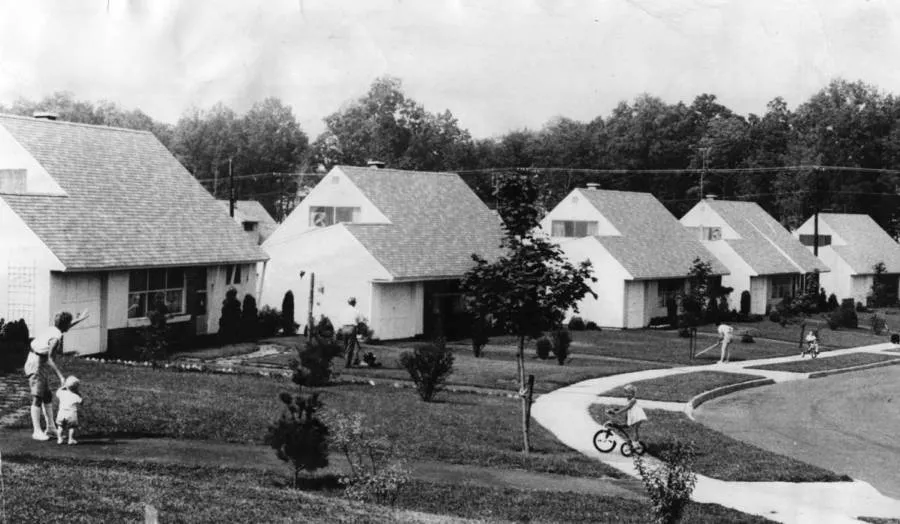 Photo: William Levitt, via allthatsinteresting.com
These weren't subprime loans or risky ventures. Default rates remained remarkably low because community bankers knew their customers personally. They understood local job markets, recognized stable employers, and could spot character traits that no algorithm could measure. A man who showed up on time, maintained his property, and paid his debts created a reputation that carried more weight than any credit score.
The Relationship Economy
What we've lost isn't just speed – it's the entire concept of relationship banking. Your banker knew your family's financial story across generations. They celebrated when you got promoted, understood when you faced temporary setbacks, and helped you plan for major purchases years in advance.
This created a feedback loop of accountability. Borrowers felt genuine responsibility to the person who had vouched for them, not just to some corporate entity. Bankers took pride in helping families achieve homeownership, viewing themselves as community builders rather than just profit centers.
When Everything Changed
The transformation began in the 1970s and accelerated through the 1980s as banking deregulation allowed institutions to expand beyond their local markets. Loans became commodities to be packaged, sold, and resold to distant investors. The mortgage broker who originated your loan might never see you again after closing.
Today's mortgage process reflects this disconnection. Applications get fed into automated systems that score risk based on data points rather than human judgment. Loan officers often work for companies they've never visited, approving loans for people they'll never meet, in communities they've never seen.
The average mortgage now takes 45-60 days to close, assuming no complications. Borrowers navigate a maze of specialists: loan processors, underwriters, appraisers, title companies, and closing agents. Each hand-off introduces potential delays and miscommunications that simply didn't exist when one person managed the entire relationship.
The Price of Progress
This shift brought undeniable benefits. Standardized lending practices reduced discrimination, expanded access to credit, and created more consistent qualification standards. National banks could offer competitive rates and innovative loan products that small community banks couldn't match.
But we've also lost something irreplaceable: the human element that made borrowing feel like a partnership rather than a transaction. Today's homebuyers navigate lending as adversaries, assuming their mortgage company is looking for reasons to deny rather than approve their application.
The Echo of What We Lost
The five-minute mortgage wasn't really about speed – it was about community. In an era when your reputation was your most valuable asset, banks operated as extensions of the social fabric rather than as external financial services.
When your banker lived three streets over and his kids went to school with yours, lending became a fundamentally different proposition. It was personal, accountable, and surprisingly efficient. Today's mortgage maze, for all its technological sophistication, struggles to recapture the simple effectiveness of two neighbors making a deal based on mutual trust and shared community stakes.