One Room, One Doctor, One Answer: The Era When Medicine Didn't Make You Wait
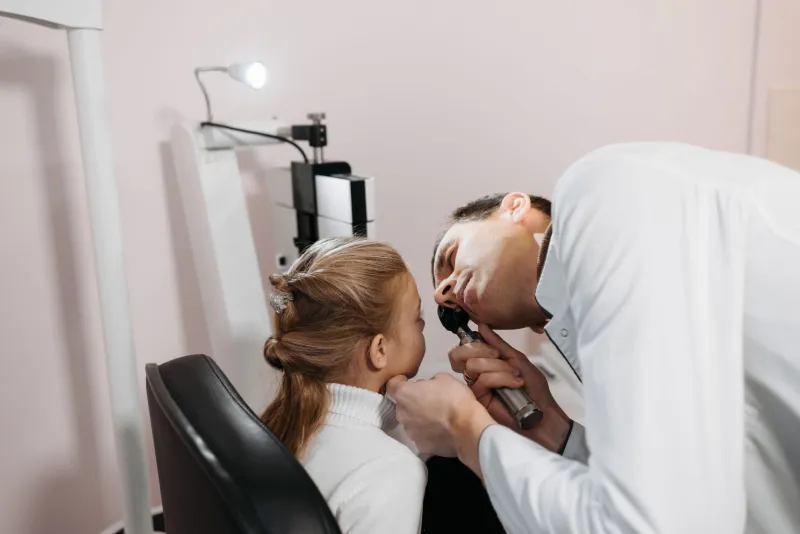
Somewhere between 1955 and now, the American medical appointment changed shape entirely. What used to be a conversation — a handshake, a stethoscope, a confident diagnosis delivered across a wooden desk — became a process. A system. A sequence of referrals, follow-up appointments, and specialist consultations that can stretch across weeks before anyone says anything definitive.
Neither version is entirely wrong. But something real was lost in the shift, and it's worth understanding what that something actually was.
The Doctor Who Knew Your Name and Your Problem
For much of the mid-20th century, the family physician was the center of American medical life. Not a gateway to specialists, but the specialist himself. General practitioners were trained broadly and expected to handle a remarkable range of conditions — setting bones, delivering babies, identifying infections, managing chronic illness — all within the same four walls.
When you came in with chest tightness or a persistent cough or a lump that worried you, the doctor examined you, asked questions, thought it through, and told you what he believed was happening. He might order a blood test. He might take an X-ray right there in the office. But the expectation — on both sides — was that you'd leave with some kind of answer.
That answer wasn't always correct. The tools were limited. The knowledge base, by modern standards, had significant gaps. But the psychological experience of that visit was entirely different from what Americans navigate today. You came in uncertain. You left with something to hold onto.
What Changed — and Why
Medicine didn't fragment by accident. It fragmented because it got dramatically better.
The explosion of medical knowledge across the second half of the 20th century made genuine specialization not just possible but necessary. Cardiology, oncology, neurology, endocrinology — each of these fields grew so deep and so technically complex that no single physician could reasonably master all of them. The generalist who once handled everything became, almost by definition, someone who could handle nothing quite as well as a dedicated specialist.
Diagnostic technology followed the same curve. MRI machines, CT scans, genetic panels, advanced bloodwork — tools that simply didn't exist in 1960 now sit at the center of accurate diagnosis. The modern physician who doesn't refer you for imaging before making a call isn't being thorough. They're cutting corners.
So the system expanded. More steps, more providers, more precision. And somewhere in that expansion, the experience of being a patient changed fundamentally.
The Hidden Cost of Thoroughness
Here's what the modern patient knows that nobody talks about much: waiting for a diagnosis is its own kind of suffering.
You notice something wrong. You get an appointment — maybe a week out, maybe three. The doctor sees you, runs some tests, refers you to someone else. That someone else has a two-week wait. They order an imaging study. The results take four days. You go back for a follow-up. It has now been six weeks since you first noticed the thing that worried you, and you have spent every one of those days in a low-grade state of anxiety that affects your sleep, your work, and your relationships.
The mid-century patient didn't have to live in that limbo. Their doctor gave them an answer — accurate or not — and they could begin processing it. Grief, relief, a treatment plan, whatever came next. The psychological machinery of coping could actually start running.
Researchers who study patient experience have found that uncertainty is often more distressing than a difficult diagnosis. People can adapt to bad news. What's much harder to adapt to is not knowing.
What We Gained — And It's Substantial
None of this is an argument for going backward. The diagnostic accuracy of modern medicine is genuinely remarkable, and the consequences of getting it wrong are real. A mid-century GP who confidently misdiagnosed early-stage cancer as indigestion wasn't providing comfort — he was providing false comfort, and the distinction matters enormously.
Modern medicine catches things that would have been death sentences fifty years ago. It identifies rare conditions that once went unnamed for entire lifetimes. It gives people actual answers rather than confident-sounding guesses. That's not a small thing.
But the system as it currently functions in the United States hasn't found a great way to manage the human experience of moving through it. The thoroughness is real. The wait is also real. The anxiety is also real. And for many patients — especially those navigating the process without strong health literacy or reliable insurance — the fragmentation feels less like precision medicine and more like being passed from stranger to stranger without anyone actually in charge.
The Gap Nobody's Filling
What the old model had, at its best, was a relationship. The family doctor who saw you for decades wasn't just a diagnostician — he was a longitudinal record of your health, someone who knew what your baseline looked like and could recognize when something had shifted. That context made him faster, not just warmer.
The modern system, for all its technical sophistication, often lacks that thread of continuity. You might see a different physician every visit. Your specialist doesn't know your history beyond what fits in a referral note. Nobody is holding the full picture.
Some practices are trying to rebuild that — concierge medicine, patient-centered medical homes, integrated care models. But they're the exception, not the rule.
The era of the single-visit diagnosis wasn't a golden age. But it understood something about the patient experience that modern medicine is still trying to figure out: people don't just need accurate answers. They need answers they can actually live with — delivered by someone who sees them as a person, not a case number moving through a queue.