The Zero-Waste Kitchen: How Americans Once Made Every Scrap Count
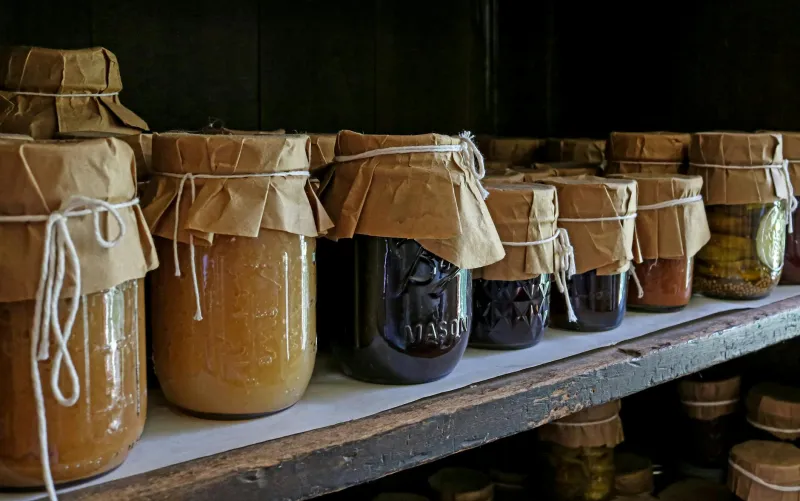
The Autumn Ritual That Fed Families All Year
Every September, the kitchen transformed into something resembling a small factory. Steam rose from multiple pots, glass jars lined every available surface, and the smell of vinegar, salt, and spices filled the air for weeks. This wasn't gourmet cooking—it was survival preparation disguised as domestic art.
American households in the early 1900s operated under a simple principle that would shock modern consumers: nothing edible was ever thrown away. Not the potato peels (which became livestock feed), not the apple cores (which went into vinegar), and certainly not the meat scraps (which became sausage, soup stock, or preserved fat for cooking).
This wasn't about environmental consciousness or trendy sustainability—it was economic necessity elevated to an art form.
The Science of Making Food Last
Before electric refrigeration became standard in the 1930s, American cooks had mastered preservation techniques that modern food scientists study with admiration. Every household maintained what amounted to a complex food laboratory, using salt, sugar, acid, smoke, and controlled fermentation to extend the life of perishable ingredients for months or even years.
The typical farmhouse root cellar contained a carefully orchestrated collection of preserved foods: barrels of salted pork, crocks of fermented vegetables, shelves lined with canned fruits and vegetables, and hanging bundles of dried herbs and vegetables. Each item represented hours of skilled labor and deep knowledge about food chemistry.
Women (and it was almost exclusively women's work) understood the precise salt concentrations needed for different types of preservation, the temperature requirements for successful fermentation, and the timing necessary to capture vegetables at peak nutrition before preservation. This knowledge was passed down through generations like family recipes, creating regional variations in preservation techniques that reflected local climates and available ingredients.
The Daily Dance of Using Everything
Modern Americans might preserve a few tomatoes or pickle some cucumbers as a hobby, but our ancestors preserved everything. Fruit that was slightly overripe became jam or fruit leather. Vegetables past their prime went into relishes or fermented condiments. Even food scraps that couldn't be eaten directly found purpose—vegetable trimmings became soup stock, meat bones were boiled repeatedly until they crumbled, and cooking fats were saved and reused until they were no longer fit for human consumption (at which point they became soap).
The efficiency was staggering. A single pig, slaughtered in late fall, would provide fresh meat for immediate consumption, hams and bacon for smoking, smaller cuts for salt preservation, organs for immediate use or sausage making, fat for cooking and soap making, and bones for tools and soup stock. Even the bristles were saved for brushes.
Gardening was planned around preservation capacity. Families planted varieties of vegetables specifically chosen for their storage characteristics rather than immediate flavor. They grew turnips and potatoes that could last in root cellars until spring, beans that dried well for winter protein, and multiple varieties of apples that ripened at different times to extend fresh fruit availability.
The Economics of Efficiency
The financial implications of this food system were profound. Families could feed themselves year-round from what they grew, hunted, or purchased during harvest season. Food costs represented a much smaller percentage of household income than they do today, despite the labor-intensive nature of preparation and preservation.
More importantly, this system provided food security that modern Americans can barely imagine. A well-managed household larder could sustain a family through crop failures, economic downturns, or other disruptions that might limit access to purchased food. The preserved foods weren't just convenient—they were insurance against hunger.
This self-sufficiency extended beyond individual households to entire communities. Neighbors shared knowledge, equipment, and labor during preservation season. Someone with a large smokehouse might process meat for several families, while others shared the work of large-batch canning operations that were more efficient than individual household efforts.
What We Gained and Lost
The transformation of American food systems after World War II brought undeniable benefits. Refrigeration, improved transportation, and year-round food availability freed households from the intensive labor of food preservation. Women gained time for other pursuits as food preparation became simpler and less time-consuming.
Supermarkets provided variety and convenience that earlier generations couldn't have imagined. Frozen foods, canned goods, and processed meals made it possible to prepare dinner in minutes rather than hours. The modern food system enabled lifestyle changes that would have been impossible when food preservation consumed significant portions of household time and energy.
But we also lost something profound: the deep knowledge of food and its possibilities that came with handling every ingredient from its raw state to its final consumption. Modern Americans often don't know what to do with food scraps that previous generations would have automatically incorporated into other meals.
The Modern Waste Reality
Today's statistics would have horrified those efficient ancestors. Americans throw away approximately 40% of the food they purchase—roughly 1,000 pounds per person annually. That's more food waste than most historical families purchased in an entire year.
The waste occurs at every level of the modern food system. Grocery stores discard produce that doesn't meet cosmetic standards, restaurants throw away portions that would have fed entire families in earlier eras, and households routinely discard food that's past its peak freshness but still perfectly edible.
This waste represents not just lost money, but lost resources. The water, energy, and labor that went into producing discarded food makes food waste one of the largest contributors to environmental problems that didn't exist when preservation was a survival skill.
The Knowledge Gap
Perhaps most significantly, we've lost the knowledge itself. Skills that were once considered basic household competency—identifying when foods are properly fermented, understanding safe preservation techniques, knowing how to use every part of an ingredient—have become specialized knowledge held by food enthusiasts and professional chefs.
This knowledge gap creates a dependency on industrial food systems that previous generations never experienced. When supply chains are disrupted, modern households often struggle to maintain adequate nutrition because they lack the preservation and preparation skills that once made families resilient.
The irony is stark: in an era when information is more accessible than ever, practical food knowledge has become scarcer than it was when most Americans lived on farms and learned preservation techniques from childhood observation.
The Quiet Revival
Interestingly, many of these old techniques are experiencing a revival among younger Americans who view them as solutions to modern problems rather than obsolete traditions. Fermentation has become trendy, home canning is growing in popularity, and "zero waste" cooking has emerged as both an environmental and economic strategy.
The COVID-19 pandemic accelerated this trend as supply chain disruptions reminded Americans of the vulnerability of just-in-time food systems. Many discovered that the preservation techniques their great-grandparents used weren't just historical curiosities—they were practical solutions to modern challenges.
Restaurants are leading some of this revival, with chefs embracing "nose-to-tail" cooking and fermentation techniques that echo earlier American food practices. What was once economic necessity is now marketed as culinary innovation.
What the Past Teaches the Present
The food preservation traditions of early America offer more than historical curiosity—they provide a roadmap for addressing contemporary challenges. Climate change, food security concerns, and environmental awareness are driving renewed interest in food systems that waste less and preserve more.
The techniques themselves remain valid. Fermentation, dehydration, and other preservation methods work as well today as they did a century ago. What's changed is our willingness to invest the time and effort these techniques require.
As food costs rise and environmental concerns grow, the zero-waste kitchen practices of our ancestors are beginning to look less like quaint traditions and more like practical solutions to problems we're only beginning to understand.