Where Everyone Knew Your Order: How America's Diners Built Community One Cup of Coffee at a Time
Where Everyone Knew Your Order: How America's Diners Built Community One Cup of Coffee at a Time
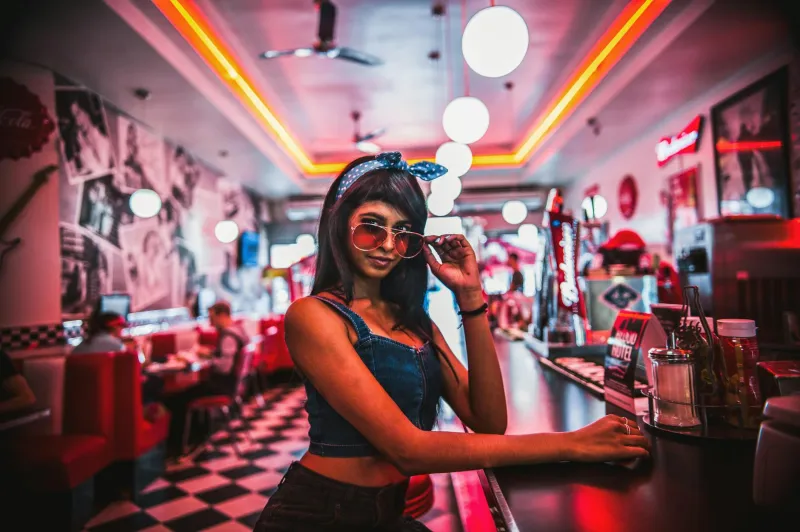
Every morning at 6:30 AM, the same ritual played out in diners across America. The factory shift supervisor would slide onto his usual stool at the counter, right next to the insurance salesman and two stools down from the retired teacher. The waitress — who'd been working there for fifteen years and knew everyone's order by heart — would pour coffee without being asked and call out "Two over easy, wheat toast, bacon crisp" to the cook before anyone said a word.
This wasn't just efficient service. It was American democracy in its most digestible form.
The Great Equalizer
The classic American diner operated on a radical principle: everyone was equal at the lunch counter. It didn't matter if you drove up in a Cadillac or walked in wearing work boots covered in sawdust. You got the same vinyl stool, the same chipped coffee mug, and the same treatment from staff who called everyone "hon" or "buddy."
Diners were accidentally egalitarian. The physical layout — long counters where strangers sat elbow-to-elbow, shared coffee pots, and conversations that drifted across open spaces — made it nearly impossible to maintain social barriers that existed everywhere else.
Bill Morrison, who ran Morrison's Diner in Toledo from 1952 to 1987, remembers the mix: "We'd have the mayor sitting next to a guy from the assembly line, both complaining about the same pothole on Elm Street. Rich, poor, didn't matter — everybody had opinions about the meatloaf."
 Photo: Elm Street, via static1.moviewebimages.com
 Photo: Morrison's Diner, via images.squarespace-cdn.com
Where News Traveled Faster Than Radio
Before social media, before cable news, before even widespread television, diners served as America's information exchanges. The morning crowd would dissect the previous night's baseball game, debate local politics, and share gossip that somehow always turned out to be true.
These weren't planned discussions. They were organic conversations that emerged from proximity and routine. When the same people showed up at the same time every day, relationships developed naturally. You'd learn that Joe's daughter was getting married, that the plant might be laying people off, or that the city council was planning something stupid with the downtown parking meters.
The diner counter was America's original social network, complete with real-time updates, community moderation (usually by the waitress), and the kind of cross-pollination of ideas that only happens when different types of people actually spend time together.
The Economics of Equality
Diners thrived because they offered something valuable to everyone: good food at fair prices, served quickly by people who treated customers like neighbors rather than transactions. The business model was democratic too — low prices meant accessibility, while high turnover meant profitability.
A typical diner menu in 1965 offered a complete breakfast for under two dollars, coffee for fifteen cents, and lunch specials that a factory worker could afford on his break. The portions were generous, the quality was consistent, and the atmosphere was unpretentious.
This wasn't charity — it was smart business. Diners succeeded by serving everyone well rather than serving a few people exceptionally. They built loyalty through familiarity rather than exclusivity.
The Efficiency of Simplicity
Classic diners were marvels of operational efficiency disguised as humble neighborhood joints. The open kitchen meant cooks and waitresses could communicate instantly. The limited but well-executed menu meant fresh ingredients and fast service. The counter seating meant maximum customers in minimum space.
But efficiency served a social purpose too. Quick turnover meant more people could use the space throughout the day. The breakfast crowd would clear out for the coffee break crowd, who'd make room for the lunch rush, followed by the afternoon coffee drinkers and the late-night shift workers.
Each group had its own character, but the space belonged to everyone. The same stool might host a nurse grabbing breakfast after a night shift, a salesman making calls over coffee, and a teenager on a first date, all in the same day.
What Replaced the Counter
The decline of the classic American diner wasn't sudden — it was death by a thousand cuts. Fast food chains offered cheaper labor costs and standardized experiences. Suburban sprawl moved customers away from downtown locations. Changing work patterns meant fewer people had predictable schedules that aligned with diner culture.
But the real killer was changing expectations about food and social interaction. Americans increasingly wanted either convenience (drive-through) or experience (theme restaurants), not the simple competence that diners provided.
Today's food landscape offers more choices but fewer shared experiences. You can get better coffee at a specialty shop, more authentic ethnic food at dedicated restaurants, and faster service through delivery apps. But you can't easily find a place where the bank president and the bus driver sit next to each other and argue about the weather.
The Isolation Economy
Modern eating habits reflect broader changes in how Americans live and work. We eat at our desks, in our cars, and in front of screens. We order food through apps that eliminate human interaction. We choose restaurants based on Yelp reviews rather than neighborhood recommendations.
This isn't necessarily worse — it's certainly more convenient and often offers better food. But it's fundamentally different. Today's dining experiences are often designed to be consumed alone or with people you already know, not to facilitate new connections with strangers.
The result is what sociologists call "lifestyle segregation" — we increasingly interact only with people who share our income level, educational background, and cultural preferences. The accidental mixing that happened at diner counters has been engineered out of modern American life.
The Democracy of Pie
Perhaps nothing embodied diner culture better than pie. Not artisanal, farm-to-table, Instagram-worthy dessert, but honest pie — apple, cherry, lemon meringue — made by someone who'd been making it the same way for twenty years.
Everyone ordered pie. The construction worker celebrating a job well done, the businessman closing a deal, the elderly widow treating herself on pension day — they all pointed to the same rotating case and made the same difficult choice between coconut cream and chocolate silk.
Pie was the great equalizer because it was simultaneously humble and special. It represented the diner's core promise: we'll treat you well without making a big deal about it.
What We're Still Hungry For
The nostalgia for classic diners isn't really about the food, though the food was often very good. It's about the social function they served — creating spaces where Americans from different backgrounds naturally encountered each other and, in small ways, built the social fabric that holds communities together.
We've replaced diners with more efficient alternatives, but we haven't replaced their social function. The result is a food landscape that serves our stomachs better but our communities worse.
The next time you're eating lunch alone at your desk or grabbing coffee through a drive-through, consider what we traded away when we decided that efficiency mattered more than the chance encounters that happen when strangers share a meal. Sometimes the most important ingredient isn't on the menu — it's sitting on the stool next to you.