When Mail Moved at the Speed of Business: How America's Postal System Once Ran Like Clockwork
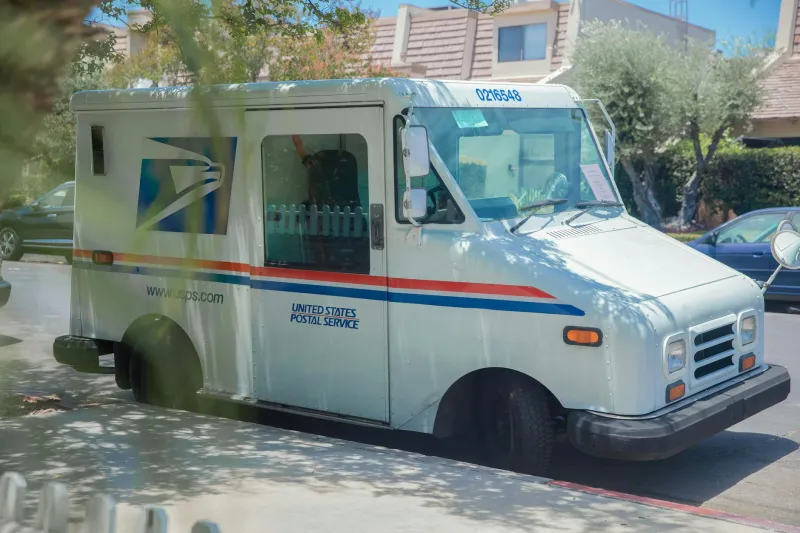
When Mail Moved at the Speed of Business: How America's Postal System Once Ran Like Clockwork
In 1890s New York City, if you mailed a letter at 9 AM from your office in Manhattan, there was a decent chance you'd have a response waiting on your desk by 5 PM. Not because of some primitive email system, but because the United States Postal Service delivered mail up to six times per day in major cities.
 Photo: New York City, via storage.needpix.com
This wasn't an experimental program or a premium service—it was Tuesday.
The Machine That Moved America
The late 19th and early 20th century postal system operated with a precision that would make Amazon jealous. In cities like Chicago, Philadelphia, and Boston, postal workers collected and delivered mail every few hours throughout the business day. The morning collection at 8 AM would be sorted, transported, and delivered by noon. The afternoon pickup would land on desks before evening.
This speed wasn't accidental. It was engineered by a postal service that understood its role as the nervous system of American commerce. Businesses scheduled their days around mail delivery times. Stock traders, wholesalers, and manufacturers could conduct multi-step negotiations within a single day, exchanging offers, counteroffers, and contracts faster than many modern email chains.
The infrastructure supporting this system was staggering. By 1920, the postal service employed over 300,000 workers—roughly one postal employee for every 350 Americans. Today, that ratio has dropped to about one for every 580 people, despite the country's population tripling.
When Your Mailman Was Your Banker
But speed was just one piece of the puzzle. The postal service handled functions that seem almost unimaginable today. Through postal savings accounts, Americans could deposit money at their local post office and earn interest. Rural families, particularly, relied on these accounts when banks were scarce or untrustworthy.
Postal money orders functioned as America's payment system. Before credit cards, before electronic transfers, postal money orders were how you paid bills, sent money to family, or conducted business with strangers. The post office essentially operated as the country's financial backbone.
Then there was parcel post, launched in 1913, which turned the postal service into America's delivery network. Families ordered everything from farm equipment to clothing through mail-order catalogs, with packages arriving reliably within days. Sears and Montgomery Ward built retail empires on the assumption that the postal service could deliver a washing machine to rural Montana as reliably as a letter to downtown Boston.
The Slow Fade of an Institution
So what happened to this marvel of efficiency and service?
The decline wasn't sudden—it was death by a thousand cuts. The rise of the telephone reduced the need for urgent written communication. Credit cards and electronic banking eliminated the postal service's financial functions. UPS and FedEx captured the package delivery market by promising speed the postal service could no longer guarantee.
But perhaps most damaging was a fundamental shift in how Americans thought about government services. The postal service that once delivered mail six times daily began to seem like an expensive luxury rather than essential infrastructure. Budget cuts reduced delivery frequency. Service standards dropped. What had been a source of national pride became a bureaucratic punchline.
Today's Postal Reality
Today's postal service delivers most mail once daily, and even that standard has eroded. First-class mail that once moved overnight now takes three to five days. A stamp that cost three cents in 1960 (about 30 cents in today's money) now costs 68 cents—more than double the inflation-adjusted price.
Meanwhile, Americans mail 50% fewer letters than they did just two decades ago. The average household receives about 2.4 pieces of first-class mail per week, compared to nearly 10 pieces in the 1980s. For many Americans under 30, the mailbox has become irrelevant except for packages and bills.
What We Lost in Translation
The transformation of America's postal system reflects a broader shift in how we think about public services and instant communication. We gained the ability to send messages instantly around the globe, but we lost something harder to quantify: a shared infrastructure that connected every American address with the same level of service.
The postal service once embodied the idea that every American—whether living in Manhattan or rural Montana—deserved the same quality of communication service. A letter from a farmer in Kansas reached Wall Street with the same reliability as correspondence between New York banks.
That democratic ideal of equal service has largely vanished. Today's communication landscape favors those with high-speed internet, smartphones, and digital literacy. The postal service that once served as America's great equalizer has become a secondary service for those who can't afford better alternatives.
The Speed of Yesterday
Looking back, the efficiency of America's historical postal system seems almost fantastical. Six deliveries daily. Same-day correspondence. A government service that functioned as reliably as clockwork.
But this wasn't fantasy—it was simply what Americans once expected from their institutions. The postal service succeeded because the country invested in making it succeed, treating mail delivery not as a burden to be minimized but as infrastructure essential to national prosperity.
As we debate the future of the postal service today, it's worth remembering what it once accomplished. The system that could deliver a letter across Manhattan faster than many modern emails reach their destination wasn't just impressive—it was proof that American institutions could work with a precision and dedication that seems almost foreign today.