When a Trip to the Dentist Meant Whiskey and Pliers: How American Dental Care Went From Terrifying to Routine
When a Trip to the Dentist Meant Whiskey and Pliers: How American Dental Care Went From Terrifying to Routine
If you've ever felt anxious about a dental cleaning, imagine this: It's 1850, and you've got a raging toothache. Your options? Find a traveling "tooth-drawer" who'll yank it out with blacksmith's pliers while you bite down on a leather strap, or visit the local barber who doubles as a surgeon. Anesthesia doesn't exist, antibiotics are decades away, and that infected tooth might just kill you.
Welcome to American dentistry before it became, well, actual dentistry.
The Wild West of Tooth Care
In 19th-century America, dental care was the domain of anyone brave enough to wield a pair of pliers. Blacksmiths, barbers, and traveling "tooth-pullers" roamed from town to town, setting up shop in taverns and public squares. These practitioners had no formal training — they learned by doing, and their patients learned by suffering.
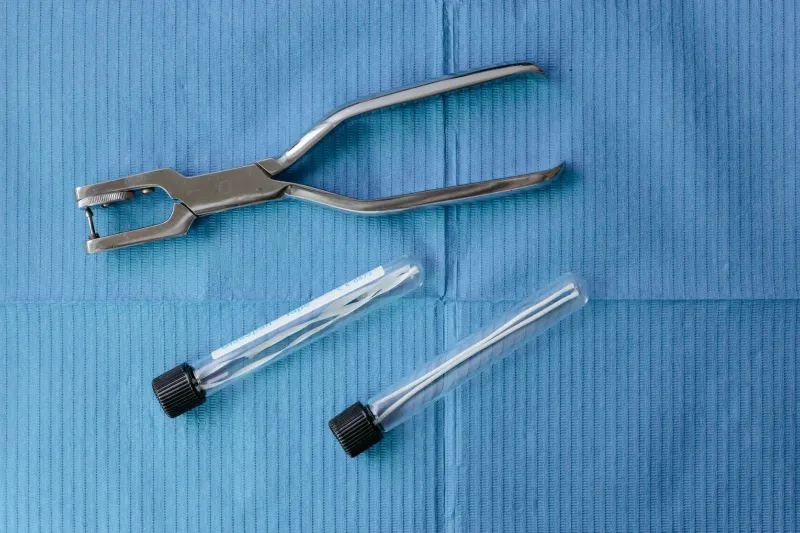
The tools of the trade were crude and terrifying. Tooth keys, which looked like oversized skeleton keys, were jammed against the tooth and twisted until something gave way — hopefully the tooth, not the jaw. Pelican forceps, named for their resemblance to a pelican's beak, crushed as much as they extracted. Pain relief consisted of whiskey, opium if you were lucky, or simply fainting from the agony.
Infections were rampant and often fatal. George Washington's famous dental problems weren't just cosmetic — they were life-threatening. By the time he became president, he had only one natural tooth left, and his various sets of dentures (made from ivory, gold, and yes, human teeth) caused him constant pain and affected his speech.
When Dentistry Got Scientific
The transformation began in 1840 when Dr. Horace Wells, a Connecticut dentist, discovered nitrous oxide's anesthetic properties during a laughing gas demonstration. After watching a fellow inhale the gas and injure himself without feeling pain, Wells realized he'd found the key to painless dentistry.
Wells tested it on himself first, having a colleague extract one of his own teeth while under the influence of nitrous oxide. He felt nothing. This single moment changed everything, though Wells' public demonstration at Harvard failed spectacularly when the patient wasn't given enough gas and screamed in agony.
Despite the setback, the anesthesia revolution was unstoppable. Ether followed nitrous oxide, and suddenly, dental procedures became survivable experiences rather than torture sessions.
The Birth of Modern Dentistry
The real turning point came with the establishment of America's first dental school in 1840 — the Baltimore College of Dental Surgery. For the first time, tooth care became a legitimate medical profession requiring formal education.
Dr. Greene Vardiman Black, known as the "Father of Modern Dentistry," revolutionized the field in the late 1800s. He developed standardized cavity preparation techniques and introduced the foot-powered dental drill. His famous motto — "extension for prevention" — meant removing all decayed tissue to prevent further problems, a principle still followed today.
The early 1900s brought X-rays to dentistry, allowing practitioners to see problems before they became emergencies. Suddenly, dentists could spot cavities, impacted teeth, and infections while they were still treatable.
From Survival to Smiles
By the 1950s, American dentistry had transformed completely. Fluoride was added to public water supplies, reducing cavities by up to 60%. High-speed drills made procedures faster and more comfortable. Local anesthetics like Novocain meant patients could have extensive work done without feeling a thing.
The profession's focus shifted from emergency extraction to prevention and aesthetics. Regular cleanings became standard. Orthodontics moved beyond medical necessity to cosmetic improvement. Americans began expecting not just functional teeth, but beautiful smiles.
The Modern Miracle
Today's dental visit would seem like science fiction to someone from 1850. Digital X-rays provide instant, detailed images. Laser dentistry can treat cavities without drilling. Sedation dentistry makes even the most anxious patients comfortable. Implants can replace lost teeth so perfectly that even dentists can't tell the difference.
Pain management has become so sophisticated that many patients fall asleep during procedures. What once required whiskey and prayer now happens with gentle music and nitrous oxide that tastes like strawberries.
The statistics tell the story of this transformation. In 1900, the average American had lost most of their teeth by age 50. Today, most people keep their natural teeth for life. Oral infections, once a leading cause of death, are now rare and easily treatable.
The Price of Progress
This transformation came with costs. Modern dental care, while infinitely more effective and comfortable, is also exponentially more expensive. A simple filling that might have cost a few dollars in 1950 can run hundreds today. The sophisticated equipment, extensive training, and liability insurance that make modern dentistry safe and effective also make it expensive.
Yet few would trade today's dental experience for yesterday's. The anxiety many feel about dental visits pales in comparison to the terror our ancestors faced when confronted with a toothache.
A Revolution in Everyday Life
The transformation of American dentistry represents one of medicine's greatest success stories. In just 150 years, we've gone from a world where tooth pain was a fact of life and dental problems could be fatal, to one where maintaining a healthy, beautiful smile is routine.
Next time you settle into that comfortable dental chair, remember: you're experiencing a level of care that would have seemed miraculous to someone just a few generations ago. The journey from whiskey and pliers to painless perfection is one of the most dramatic shifts in American healthcare — and one that literally changed how we smile.