When Calling Someone Cost More Than Your Coffee and Every Word in a Letter Counted
When Calling Someone Cost More Than Your Coffee and Every Word in a Letter Counted
In 1960, calling your grandmother in another state wasn't just emotionally significant—it was a financial decision. A ten-minute long-distance call from New York to California cost around $3, equivalent to about $30 today. Families literally budgeted for phone calls the way we budget for streaming services now.
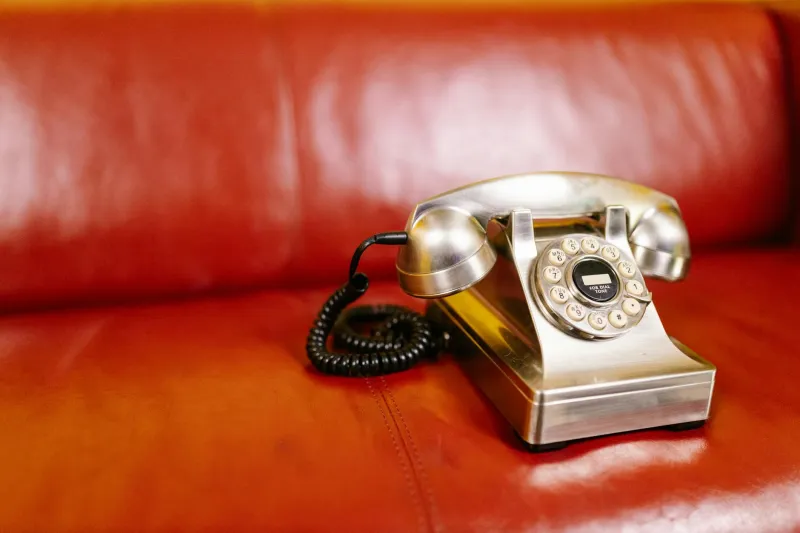
Most American households shared a single rotary phone, often mounted on the kitchen wall where everyone could hear your conversation. Privacy meant stretching that coiled cord as far as it would go, usually into the hallway closet. And if you lived in a rural area, you probably shared a "party line" with your neighbors—meaning Mrs. Henderson down the road could listen in on your call if she picked up her phone at the wrong moment.
The Lost Art of Letter Writing
While phone calls were expensive and limited, letter writing was America's primary communication lifeline. The average American household sent and received dozens of letters each month. College students wrote home weekly, not because they had to, but because it was the only practical way to stay connected.
These weren't quick updates or emoji-filled messages. Letters were events. People sat down with intention, chose their words carefully, and often wrote multiple drafts. A single letter might contain weeks' worth of news, thoughts, and emotions compressed into a few precious pages.
The ritual was as important as the content. Americans kept dedicated writing desks stocked with stationary, fountain pens, and stamps. Letter writing was taught in schools as a life skill, right alongside typing and arithmetic. People developed distinct handwriting styles and took pride in their penmanship.
When Distance Actually Meant Something
Before instant communication, physical distance created emotional weight. When your son moved to another state for work, you genuinely felt further apart. Letters took days to arrive, creating a rhythm of anticipation and response that stretched conversations across weeks.
This delay wasn't just inconvenient—it shaped how people communicated. You couldn't fire off an angry response in the heat of the moment. By the time you sat down to write a reply, emotions had cooled and thoughts had crystallized. Arguments that might explode across text messages today were resolved through careful, considered correspondence.
Families developed elaborate systems for staying connected. Some sent round-robin letters that traveled from household to household, with each family adding their news before passing it along. Others established regular writing schedules—Mom writes on Sundays, Dad handles business correspondence on weeknights.
The Economics of Connection
Long-distance calling was so expensive that phone companies offered different rates for different times of day. "Night and weekend rates" weren't just marketing—they represented genuine savings that families planned around. Important conversations were scheduled like appointments, often saved for Sunday evenings when rates dropped.
Operators were real people who manually connected your calls. You'd dial "0" and say something like "I'd like to place a person-to-person call to Robert Johnson in Denver, Colorado." The operator would track down your party, confirm the connection, and monitor the call for billing purposes. It was personal service, but it came at personal service prices.
Even local calls weren't unlimited in many areas. Some phone companies charged per call or limited you to a certain number of monthly calls. The phrase "keep it short" wasn't just politeness—it was financial necessity.
What We Gained and Lost
Today, we can video chat with someone on the other side of the world for free. We send dozens of messages daily without thinking about cost or effort. We're more connected than any generation in human history.
But something shifted in the transition. When communication was expensive and deliberate, it carried weight. People thought before they spoke, chose their words carefully, and treated conversations as valuable exchanges rather than casual noise.
The letters people saved from that era—stored in shoeboxes and handed down through generations—reveal a depth of expression that's harder to find in today's digital communications. When you had one chance to capture your thoughts, you made it count.
The Rhythm of Slower Connection
Perhaps most significantly, delayed communication created space for reflection. You wrote a letter, sent it, then waited days or weeks for a response. During that waiting period, life continued. You processed your thoughts, experienced new things, and had time to consider different perspectives before the conversation resumed.
This rhythm feels almost impossible to recreate today. We expect immediate responses to our messages and feel ignored when they don't come within hours. The space between sending and receiving—once a natural part of communication—now feels like a void to be filled.
The shift from letters and expensive calls to instant, free communication represents one of the most dramatic changes in human behavior over the past century. We gained unprecedented connection and lost the weight that made every word matter. Whether that trade-off made us better communicators or just more frequent ones remains an open question—one that previous generations would have debated through carefully crafted letters, while we'll hash it out in real-time across a dozen different platforms.