From Hoover Dam to Endless Delays: How America Lost the Art of Building Anything Fast
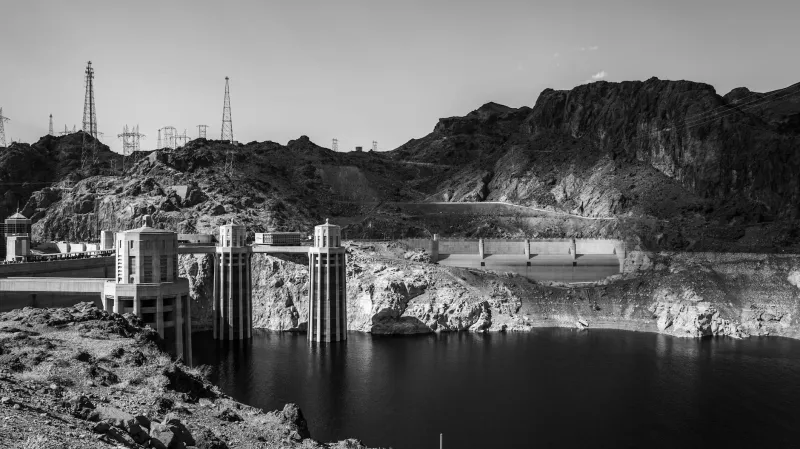
In 1931, the United States decided to tame the Colorado River with the largest concrete structure ever attempted. Four years and 3.25 million cubic yards of concrete later, the Hoover Dam stood complete — two years ahead of schedule. Meanwhile, in 2024, New York's Second Avenue Subway expansion, covering less than two miles, is approaching its 16th year of construction.
Something broke along the way. The country that once built transcontinental railroads in six years and erected the Empire State Building in 410 days now treats decade-long infrastructure projects as perfectly normal. How did the land of "can-do" become the kingdom of "can't-do-it-quickly"?
When America Moved at Warp Speed
The mid-20th century was America's construction golden age, when ambitious projects moved from blueprint to ribbon-cutting with breathtaking speed. The Pentagon, still the world's largest office building, rose from empty field to functional headquarters in just 16 months during World War II. The entire Interstate Highway System — 41,000 miles of roadway connecting every major city in America — was substantially complete within 25 years of its 1956 authorization.
These weren't small projects tackled by unlimited budgets. The Hoover Dam cost $49 million in 1935 dollars (about $900 million today) and employed 21,000 workers at its peak. The Empire State Building, rising 1,454 feet into the Manhattan sky, cost $41 million and required coordinating thousands of workers across dozens of trades. Yet both finished ahead of schedule.
The secret wasn't just money or manpower — it was a fundamentally different approach to getting things done. Projects had clear chains of command, streamlined approval processes, and a cultural expectation that big things should happen fast.
The Bureaucracy Explosion
Today's infrastructure projects navigate a labyrinth of regulations, environmental reviews, public comment periods, and legal challenges that would have baffled earlier generations. The National Environmental Policy Act, passed in 1970, requires environmental impact statements that can take years to complete. The result is thorough environmental protection, but also analysis paralysis.
Consider California's high-speed rail project, approved by voters in 2008 with a budget of $33 billion and a completion date of 2020. Sixteen years later, the project has consumed over $100 billion, completed zero miles of usable track, and pushed its completion date to "sometime in the 2030s." For comparison, Japan built its entire original bullet train network — 320 miles connecting Tokyo to Osaka — in six years during the 1960s.
The difference isn't engineering capability or financial resources. It's the sheer number of hurdles that must be cleared before a single shovel hits dirt. Modern projects require dozens of permits from multiple agencies, each with its own timeline and requirements. Public input sessions can stretch for years, with every stakeholder group wielding effective veto power.
The Lawsuit Lottery
Perhaps nothing illustrates America's construction paralysis better than the legal gauntlet every major project must run. Environmental groups, neighborhood associations, competing contractors, and political opponents can file lawsuits that halt construction for years while courts sort through competing claims.
The Second Avenue Subway, first proposed in 1929, has been delayed by everything from World War II to budget crises to environmental reviews to construction disputes. When Phase 1 finally opened in 2017 after decades of stops and starts, it cost $4.5 billion for three stations — making it the most expensive subway construction in world history.
Compare this to the original New York subway system, built between 1900 and 1940, which added 300+ stations across four boroughs in less time than it's taking to add three stations today. The difference isn't technology or engineering knowledge — it's the legal and regulatory framework that treats every project as guilty until proven innocent.
The Perfection Paradox
Modern America has developed an obsession with perfection that would have mystified earlier generations. Every potential risk must be studied, every environmental impact assessed, every stakeholder concern addressed. The result is projects so thoroughly vetted that they often become too expensive or too delayed to be worth completing.
The Hoover Dam killed 96 workers during construction — a tragedy that would be unacceptable today. Modern safety standards have dramatically reduced construction fatalities, which is undeniably progress. But the pendulum has swung so far toward risk aversion that we struggle to accept any uncertainty or trade-offs.
Earlier generations understood that perfect could be the enemy of good. The Interstate Highway System displaced thousands of families and altered entire neighborhoods, but Americans accepted these costs for the greater benefit of national connectivity. Today's projects face years of delays while planners attempt to satisfy every possible concern, often resulting in compromised solutions that please no one.
The Skills Shortage
America has also lost much of its institutional knowledge about managing large construction projects. The generation that built the Interstate Highway System and sent humans to the moon has retired, taking their expertise with them. Today's project managers often lack experience with truly massive undertakings because we build so few of them.
Meanwhile, countries like China complete infrastructure projects at speeds that seem impossible to American observers. Beijing built an entire subway system larger than New York's in just 20 years. The difference isn't just political systems — it's institutional memory and cultural expectations about what's possible.
The Cost of Slow
America's construction paralysis carries enormous hidden costs. Delayed projects mean continued traffic congestion, crumbling bridges, and missed economic opportunities. The Second Avenue Subway's delays cost New York billions in lost productivity as commuters endured overcrowded trains for decades.
More fundamentally, America's inability to build quickly undermines public faith in government competence. When citizens see simple projects drag on for years while costs spiral out of control, they lose confidence in public institutions' ability to tackle larger challenges like climate change or infrastructure modernization.
Learning from the Past
The solution isn't to abandon environmental protection or worker safety — it's to rediscover the art of decisive action within reasonable constraints. Some states are experimenting with streamlined approval processes for certain projects. Others are creating dedicated infrastructure authorities with power to cut through bureaucratic delays.
The key insight from America's construction golden age wasn't that they ignored problems — it's that they prioritized solutions over process. They understood that building something good quickly was often better than building something perfect slowly. In a world facing climate change, aging infrastructure, and economic competition from faster-moving nations, America might need to remember that lesson.
The Hoover Dam still stands, still generates power, still controls floods after nearly a century. Sometimes the best monument to perfectionism is simply getting the job done.