The Doctor Will See You at Home: When American Medicine Made House Calls
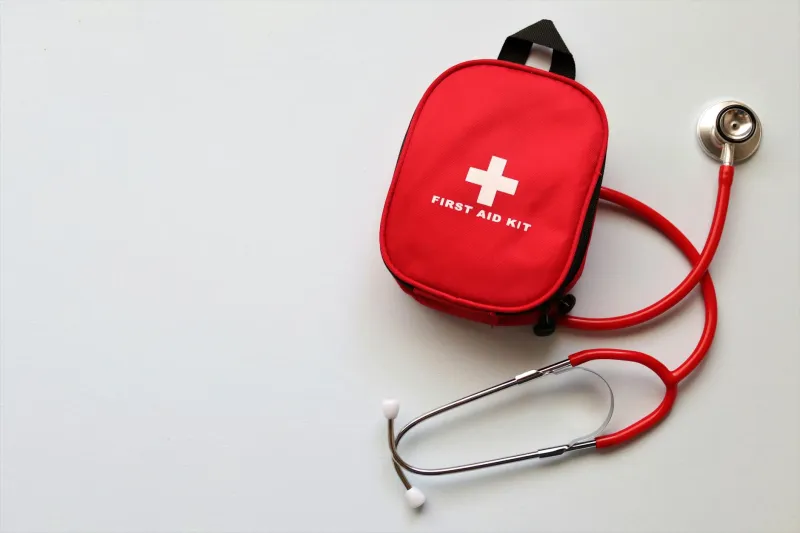
Dr. Margaret Thompson carried everything she needed in a worn leather bag: stethoscope, blood pressure cuff, thermometer, basic medications, and the kind of diagnostic intuition that came from seeing patients in their actual lives rather than sterile exam rooms. In 1955 Chicago, she made an average of twelve house calls daily, treating everything from childhood fevers to elderly patients too frail to travel.
 Photo: Dr. Margaret Thompson, via www.beasleyallen.com
This wasn't concierge medicine for the wealthy—it was standard American healthcare. The house call was so routine that most Americans couldn't imagine seeing a doctor any other way. Today, the idea seems almost fantastical, a relic from an era when medicine was simpler and doctors had unlimited time. But the reality was more complex and more revealing about what we've lost in our rush toward efficiency.
Medicine in Context
The house call allowed doctors to practice medicine in ways that modern physicians can barely comprehend. When Dr. Thompson arrived at the Sullivan family's apartment to check on 8-year-old Tommy's persistent cough, she didn't just examine the child—she observed his environment. The drafty windows, the coal stove, the sleeping arrangements that put three children in one small room. These weren't just background details; they were diagnostic information.
 Photo: Sullivan family, via www.largerfamilylife.com
She could see that Mrs. Sullivan was exhausted from caring for Tommy while managing her other children and household duties. She noticed that Mr. Sullivan's work clothes suggested exposure to industrial dust that might be aggravating the family's respiratory issues. The prescription she wrote wasn't just for Tommy's cough medicine—it included practical advice about ventilation, sleeping arrangements, and when to worry versus when to wait.
This holistic approach wasn't revolutionary; it was simply what happened when doctors treated patients as whole people living in specific circumstances rather than collections of symptoms appearing in exam rooms.
The Economics of Accessibility
House calls made economic sense in ways that seem impossible today. In 1950, a typical house call cost between $3 and $5—roughly equivalent to $35-50 in today's money. This wasn't because doctors were underpaid; it was because the entire system operated more efficiently than modern medicine.
Doctors could see more patients by making rounds through neighborhoods rather than having each patient travel to them. Dr. Thompson could visit six patients on the same city block in the time it would take those six patients to travel to her office, wait, and return home. The economics favored the house call because it eliminated the massive overhead costs of modern medical facilities.
Insurance was less complex because the services were simpler. A house call was a house call—there weren't separate billing codes for the examination, the facility usage, the administrative overhead, and the various ancillary services that inflate modern medical bills. The doctor's time and expertise were the product, not a maze of procedures and facility fees.
The Black Bag Era
The doctor's medical bag became an iconic symbol because it represented medicine's portability and accessibility. These bags contained everything needed for 80% of medical situations: basic diagnostic tools, common medications, and emergency supplies. The limitations weren't bugs—they were features that forced doctors to develop strong clinical skills rather than relying on expensive testing.
Dr. Thompson could diagnose pneumonia with her stethoscope and experience, treat minor injuries with supplies from her bag, and provide immediate relief for common ailments without sending patients through a maze of specialists and facilities. When she couldn't handle a situation—serious injuries, complex surgical needs, advanced diagnostics—she knew exactly when and how to refer patients to hospital care.
This system worked because it was designed around the reality that most medical needs are routine and most patients benefit more from timely, personal attention than from access to every possible medical technology.
The Relationship-Based Model
Perhaps most importantly, house calls created sustained relationships between doctors and families. Dr. Thompson didn't just treat the Sullivan family's illnesses—she knew their medical history, their living situation, their economic constraints, and their family dynamics. She had delivered Tommy, treated his grandmother's arthritis, and helped Mr. Sullivan through his recovery from a factory accident.
This continuity of care meant that she could spot changes in health patterns, understand how family stresses affected individual health, and provide preventive guidance that made sense for each family's specific circumstances. When Tommy developed his cough, Dr. Thompson already knew about his tendency toward respiratory issues, his family's living conditions, and his mother's anxiety about childhood illnesses.
The trust built through this relationship model meant that patients followed medical advice more consistently and sought help earlier when problems developed. Dr. Thompson's recommendations carried weight because they came from someone who understood the family's life, not a stranger seeing them for the first time.
The System That Replaced It
The decline of house calls wasn't sudden—it was a gradual shift driven by changing medical technology, urban development patterns, and economic incentives. As medical equipment became more sophisticated, it became impractical to carry everything needed for comprehensive diagnosis. Suburban sprawl made efficient house call routes impossible. Insurance systems began favoring facility-based care.
By the 1970s, the house call had largely disappeared, replaced by a clinic-based system that promised greater efficiency and access to advanced technology. Patients would come to the medicine rather than medicine coming to them. The trade-offs seemed reasonable: slightly less convenience in exchange for better equipped facilities and more specialized care.
Today's Medical Reality
Modern American healthcare operates on fundamentally different assumptions than the house call era. Today's system excels at complex procedures, advanced diagnostics, and specialized treatments that would have been impossible in Dr. Thompson's black bag. But it struggles with the routine, relationship-based care that once formed medicine's foundation.
The average primary care appointment lasts 15-20 minutes, barely enough time for a focused examination, let alone the kind of holistic assessment that house calls provided. Patients often see different providers for each visit, making continuity of care difficult. The focus has shifted from knowing patients as people to processing them as efficiently as possible.
Emergency rooms, designed for true emergencies, have become the default for patients who can't get timely access to primary care. The result is a system that's simultaneously over-engineered for complex problems and under-equipped for simple ones—the inverse of what most patients actually need most of the time.
What the House Call Taught
The house call era demonstrated that effective medicine wasn't just about medical knowledge—it was about understanding patients in context. Dr. Thompson's effectiveness came not just from her clinical skills but from her ability to see how health intersected with housing, work, family dynamics, and economic circumstances.
This approach prevented problems rather than just treating them. When she advised the Sullivans about ventilation and sleeping arrangements, she was practicing preventive medicine in ways that no clinic-based system could replicate. Her recommendations were practical because they were based on actual observation of how the family lived.
The house call also demonstrated that medical care could be both personal and efficient. Dr. Thompson's neighborhood rounds were a more effective use of time than the current system where each patient must travel to receive care, wait in crowded facilities, and navigate complex administrative systems.
The Impossible Return
Could American medicine ever return to house calls? The obstacles are formidable: liability concerns, insurance systems designed around facility-based care, urban development patterns that make efficient routes impossible, and medical technology that requires sophisticated equipment.
Yet some physicians are experimenting with house call practices, often serving elderly patients or those with chronic conditions. These modern house call doctors report higher job satisfaction and better patient relationships, suggesting that something valuable was indeed lost in the transition to clinic-based care.
The house call era wasn't perfect—it lacked the diagnostic capabilities and specialized treatments that modern medicine provides. But it offered something that today's healthcare system struggles to replicate: medicine practiced in the context of patients' actual lives, delivered by doctors who knew their patients as people rather than just collections of symptoms.
As American healthcare grapples with rising costs, physician burnout, and patient dissatisfaction, the house call era serves as a reminder that effective medicine isn't just about having the most advanced technology—it's about creating systems that treat patients as whole human beings living complex lives. Sometimes the most sophisticated approach is also the most human one.