Before Netflix Killed Community: When Americans Actually Did Things Instead of Watching Them
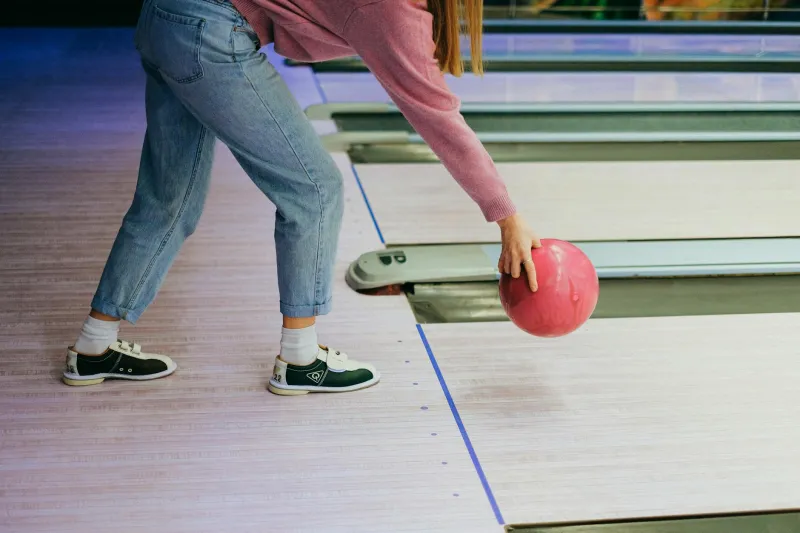
Every Tuesday night in 1962, Bill Harrison left his job at the steel plant, grabbed dinner with his wife, and headed to Sunset Lanes for his bowling league. He wasn't particularly good at bowling — his average hovered around 140 — but that wasn't the point. The point was showing up, ribbing his teammates about their form, celebrating strikes with cheap beer, and being part of something larger than his living room.
Bill's routine was utterly ordinary for his time. Across America, millions of people spent their evenings actively participating in recreational activities rather than passively consuming entertainment. They bowled, played softball, acted in community theater, sang in church choirs, and danced at local clubs. They were doing, not watching.
Today, Bill's great-grandson spends his Tuesday nights binge-watching Netflix series, scrolling through TikTok, and playing video games online with strangers. He's entertained, certainly, but he's also alone in ways that would have puzzled his great-grandfather.
The Golden Age of American Participation
The post-war boom years weren't just about economic prosperity — they marked the peak of participatory recreation in American history. By 1958, the American Bowling Congress had over 4 million members. Community theater groups operated in towns with populations as small as 5,000. Amateur baseball leagues drew crowds that rivaled some professional sports today.
These weren't elite activities for the wealthy. Factory workers, secretaries, shop owners, and teachers all mixed together in bowling alleys, community centers, and local gyms. The barriers to entry were low: a few dollars for league fees, maybe some basic equipment, and a willingness to show up regularly.
The numbers from this era are staggering. In 1955, over 40% of American adults participated in some form of organized recreational activity. Bowling alone claimed 12 million regular participants. Square dancing was so popular that 34 states considered making it their official state dance. Community choirs, amateur theater groups, and local sports leagues provided social structure for entire neighborhoods.
The Infrastructure of Fun
What made this participation possible was infrastructure — not just physical, but social. Every mid-sized American city had dozens of bowling alleys, community centers, and recreational facilities. Churches, unions, and civic organizations sponsored teams and leagues. Employers often organized company softball teams and bowling leagues as employee benefits.
Local newspapers covered amateur sports with the same attention they gave to high school football. Bowling scores appeared in the sports section. Community theater reviews ran alongside movie listings. This coverage reinforced the idea that ordinary people's recreational activities mattered and deserved attention.
The timing worked too. Most Americans worked standard hours — 9 to 5, Monday through Friday — leaving evenings and weekends free for organized activities. Shift work was less common, and the expectation of constant availability hadn't yet emerged. People could commit to showing up at the same time every week because their schedules were predictable.
When Watching Became the New Doing
The shift began gradually in the 1970s and accelerated through the following decades. Television programming expanded beyond the traditional three networks, offering more viewing options. Cable TV brought specialized sports channels, making it easier to watch professional athletics than to play amateur ones.
But the real transformation came with changes in how Americans lived and worked. Suburban sprawl made it harder to maintain local recreational communities. People commuted longer distances and worked more unpredictable hours. The social institutions that had supported participatory recreation — strong unions, active churches, stable neighborhoods — began to weaken.
Video games, VCRs, and eventually streaming services provided entertainment that didn't require coordination with other people or commitment to regular schedules. You could be entertained whenever you wanted, however you wanted, without leaving your house or interacting with neighbors.
The Numbers Don't Lie
By 2000, participation in organized recreational activities had dropped to 25% of adults. Today, it's closer to 15%. Meanwhile, the average American spends over seven hours daily consuming media — watching TV, browsing social media, playing video games, or streaming content.
Bowling provides a perfect case study. In 1963, Americans bowled 150 million games annually. By 2018, that number had dropped to 67 million, despite a much larger population. Thousands of bowling alleys closed, replaced by shopping centers and chain restaurants.
Community theater suffered similarly. The American Association of Community Theatre counted over 7,000 active groups in 1975. Today, fewer than 2,500 remain. Amateur sports leagues, dance clubs, and hobby groups all show similar declines.
What We Lost in Translation
The shift from participation to consumption cost Americans more than just physical activity or creative outlets. It dismantled social networks that had provided meaning, friendship, and community support for generations.
When Bill Harrison's bowling team gathered every Tuesday, they weren't just rolling balls at pins. They were sharing job frustrations, celebrating promotions, offering support during family crises, and building relationships that extended far beyond the bowling alley. These weak ties — connections with people outside your immediate family and work circle — proved crucial for everything from finding jobs to maintaining mental health.
Participatory activities also provided what sociologists call "social capital" — the networks of relationships that make communities function. When people regularly gathered for shared activities, they naturally discussed local issues, organized community events, and looked out for each other's welfare.
The Convenience Trap
Modern entertainment is undeniably more convenient than its participatory predecessors. You don't need to coordinate schedules, drive across town, or interact with people you might not particularly like. Netflix never cancels due to low attendance, and video games don't require you to shower and put on pants.
But convenience came with hidden costs. The social skills that Americans once developed through regular participation in group activities — negotiation, cooperation, friendly competition, gracious winning and losing — now atrophy through disuse. Many young adults report feeling anxious about joining group activities, lacking experience with the social dynamics that their grandparents navigated effortlessly.
Signs of Revival
Interestingly, some Americans are rediscovering the appeal of participatory recreation. Adult recreational sports leagues are growing in major cities. Community makerspaces provide venues for hands-on creativity. Board game cafes and trivia nights offer structured social interaction.
These modern versions often adapt to contemporary realities — more flexible scheduling, diverse activity options, and welcoming environments for people who might have felt excluded from traditional recreation. But they're rebuilding something that was once taken for granted: the simple pleasure of regularly doing things with other people.
The challenge isn't nostalgia for a perfect past that never existed. Many of those old bowling leagues and community groups had their own problems with exclusion and conformity. The challenge is figuring out how to recapture the benefits of participatory recreation — community connection, shared purpose, regular social interaction — in forms that work for contemporary American life.
Because while binge-watching the latest series might be entertaining, it's not quite the same as celebrating a strike with people who know your name.