The Accidental Athletes: How Americans Got Fit Without Ever Trying

In 1950, the average American man could carry 50-pound feed sacks all day without thinking twice about it. He'd never heard of a personal trainer, didn't own workout clothes, and wouldn't have understood why anyone would pay money to lift heavy things for fun. Yet he was probably stronger and more physically capable than most gym members today.
This wasn't because previous generations were genetically superior or more disciplined about exercise. It was because fitness wasn't exercise — it was just life.
When Work Was a Workout
For most of American history, staying in shape was an unavoidable side effect of survival. Farmers lifted hay bales, factory workers stood for ten-hour shifts, and construction crews built skyscrapers with hand tools and muscle power. Even office workers walked to streetcar stops and climbed stairs in buildings without elevators.
Consider the daily routine of a typical steelworker in Pittsburgh circa 1940. He'd walk a mile to the plant, spend eight hours lifting, carrying, and operating heavy machinery, then walk home. His "cardio" was keeping up with the pace of industrial production. His "strength training" was moving tons of raw materials.
Martha Collins, now 89, remembers her mother's daily routine in rural Kentucky: "She'd milk cows before dawn, carry water from the well, wash clothes by hand, tend the garden, and chase after five kids. By evening, she was exhausted but strong as an ox. The idea of doing extra exercise would have seemed crazy."
The Birth of Artificial Fitness
The modern fitness industry emerged precisely because Americans stopped being accidentally athletic. As the economy shifted from manufacturing to services, as suburbs sprawled beyond walking distance, and as cars replaced feet for transportation, millions of people found themselves living sedentary lives for the first time in human history.
The response was to create artificial versions of the physical challenges that used to be built into daily life. Treadmills simulated the walking that suburban design eliminated. Weight machines replicated the lifting that factory automation replaced. Exercise classes provided the physical exertion that modern convenience removed.
Jack LaLanne, often called the "godfather of fitness," opened his first gym in 1936 — right as American life was becoming mechanized enough to make gyms necessary. His innovation wasn't inventing exercise; it was recognizing that exercise needed to be invented.
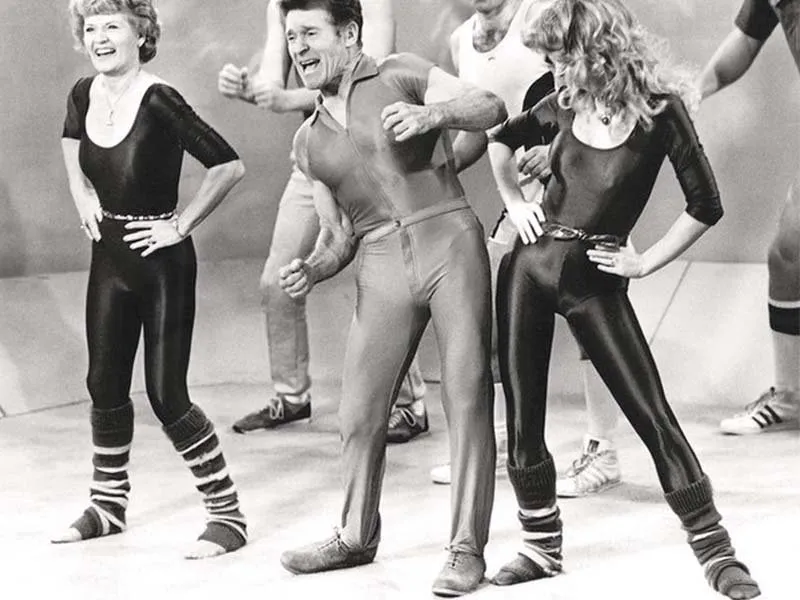 Photo: Jack LaLanne, via oldschoollabs.com
The Numbers Tell the Story
The statistics are stark. In 1900, the average American burned about 3,200 calories per day through physical activity. By 2000, that number had dropped to 2,400 calories. We became 25% less active while our food became infinitely more available and calorie-dense.
Meanwhile, the fitness industry exploded from virtually nothing to a $35 billion business. Americans now spend more on gym memberships than many countries spend on their entire military budgets. We pay monthly fees to do activities — walking, lifting, stretching — that our great-grandparents did for free as part of their normal routines.
The Suburban Fitness Problem
Suburban design played a huge role in this transformation. Post-war American communities were built around cars, not pedestrians. The average suburban resident now lives too far from stores, schools, and workplaces to reach them on foot, even if they wanted to.
Compare this to older American cities, where grocery stores, schools, and offices were within walking distance of homes. People stayed fit not because they were more disciplined, but because their environment demanded physical activity.
Dr. James Levine, who studies physical activity at Mayo Clinic, puts it simply: "We engineered physical activity out of our daily lives, then wondered why we got fat and weak."
 Photo: Mayo Clinic, via images.adsttc.com
When Strength Had Purpose
Perhaps the biggest difference between then and now is that historical fitness served obvious purposes. A farmer's strength helped him feed his family. A factory worker's endurance helped him keep his job. A housewife's stamina helped her manage a household without modern appliances.
Today's fitness is largely abstract. We lift weights to be able to lift heavier weights. We run on treadmills to improve our ability to run on treadmills. The connection between physical capability and daily life has been severed for most Americans.
This isn't to say modern fitness is pointless — quite the opposite. In a world where most jobs involve sitting at desks, deliberately exercising has become essential for health. But it's worth recognizing how strange this situation would seem to earlier generations.
The Technology Paradox
Every labor-saving device that made American life easier also made American bodies weaker. Washing machines eliminated the arm workout of hand-washing clothes. Elevators removed the leg workout of climbing stairs. Cars replaced the cardio of walking everywhere.
Each innovation was clearly beneficial — who wants to spend hours washing clothes by hand? But collectively, they created a problem that previous generations never faced: how to stay physically capable in a world designed to eliminate physical challenges.
The Social Cost of Convenience
The shift from natural fitness to artificial fitness changed more than just how Americans exercise — it changed how we think about our bodies and our capabilities. Previous generations saw physical strength as a practical necessity. Today, we often see it as a luxury hobby.
This has created new forms of inequality. Access to fitness now depends on having money for gym memberships, time for workouts, and knowledge about proper exercise. People who work multiple service jobs — ironically, often the most physically demanding jobs remaining — may be too exhausted and financially stretched to pursue additional fitness activities.
What We Lost and Found
The transition from accidental to intentional fitness wasn't entirely negative. Modern exercise science has given us better understanding of how bodies work and how to train them efficiently. Today's athletes are stronger and faster than ever before, partly because they can focus on performance rather than just survival.
But we've also lost something valuable: the integration of physical capability with daily purpose. Our ancestors didn't need motivation to exercise because exercise wasn't separate from life — it was life.
As we design the future of American communities and work, we might ask: what would it look like to build some of that accidental fitness back into our daily routines? The answer might be found not in better gyms, but in better places to live.